
Strawberry Fragaria x ananassa
Why Are My Strawberry Leaves Turning Yellow
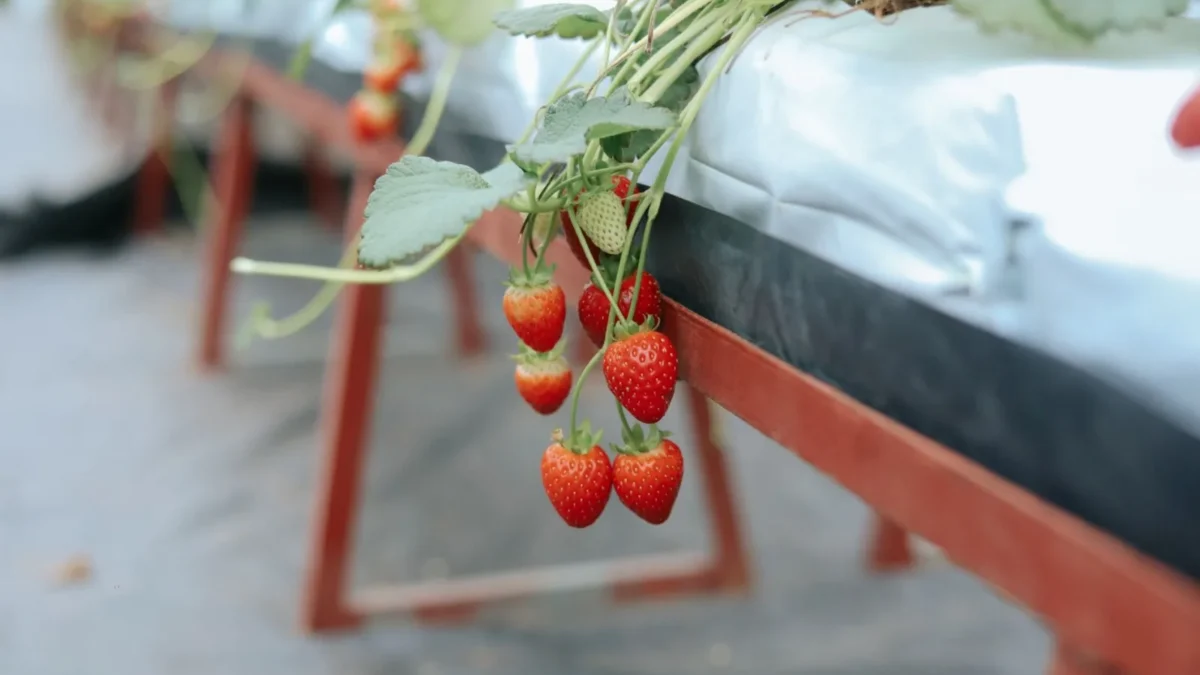
Quick answer: Strawberry leaves turning yellow usually means overwatering, poor drainage, nutrient deficiency, or insufficient light. Check soil moisture first—if it’s soggy, improve drainage. If the soil is dry, fertilize and boost light exposure.
Strawberry at a glance
| Botanical name | Fragaria x ananassa |
|---|---|
| Light | 6-8 hours direct sunlight daily; 12-16 hours LED grow lights indoors |
| Watering | 1-2 inches per week; water when top 2-4 inches soil is dry |
| Temperature | Crown dies at 15°F; prefers below 85°F in summer |
| Soil | Well-drained loamy soil, pH 5.4-6.5, rich in organic matter; 2-3 inches compost mixed in |
| Feeding | Balanced 10-10-10 NPK spring; 5-10-5 or 5-10-10 growing season; every 4-6 weeks |
| Difficulty | moderate |
| Cats | ✓ non-toxic |
| Dogs | ✓ non-toxic |
Overwatering and root rot
The most common reason strawberry leaves turn yellow is waterlogged soil. Strawberries are shallow-rooted, with most of their root system in the top 6 to 12 inches of soil. When soil stays wet, the roots suffocate and rot, and the plant can’t absorb water or nutrients properly—even though the soil is damp. The leaves yellowing is the plant’s distress signal.
Strawberries need about 1 to 2 inches of water each week during the growing season. The key is checking soil moisture at root depth: stick your finger 2 to 4 inches into the soil. If it feels wet, hold off watering. Good drainage in the top 6 to 8 inches is critical since the crown sits right at the soil surface and rots easily in standing water. If your strawberries are in pots, ensure they have drainage holes. In garden beds, grow them in well-drained, loamy soil rich in organic matter.
To fix poor drainage in existing beds, loosen the soil to 8 to 10 inches deep and mix in 2 to 3 inches of compost or well-rotted manure. Waterlogged soil causes root rot and other fungal diseases.
Nutrient deficiency
Yellow leaves, especially on older foliage, often signal a nutrient shortage. Strawberries need regular feeding to stay healthy. Fertilize in early spring before new growth starts with a balanced 10-10-10 NPK fertilizer,. During the growing season, switch to a formula higher in potassium—5-10-5 or 5-10-10—and fertilize every 4 to 6 weeks,. Potassium drives fruit size, sugar content, and disease resistance.
If you haven’t fed your strawberries all season, that’s likely your problem. Poor soil also matters: before planting, submit soil samples for nutrient testing.
Insufficient light
Yellow leaves and leggy, weak growth point to light shortage. Strawberries need at least 6 to 8 hours of direct sunlight daily. Fruit yield drops roughly 40% when daily light falls from 8 hours to 5 hours, even when water, soil, and fertilizer are perfect. A lack of sufficient light also leads to increased susceptibility to fungal pathogens.
Move potted plants to a sunnier location. If you’re growing indoors, use full-spectrum LED grow lights placed 6 to 12 inches above the plants for 12 to 16 hours daily.
Age and disease
Older leaves naturally yellow and die off as the plant matures. This is normal if new leaves stay green and vigorous. However, yellowing across the whole plant, combined with wilting or rotting at the base, signals fungal disease. Remove affected leaves and ensure air flows through the canopy. Never wet the crown or fruit when watering, as this can lead to fungal problems like grey mould.
How do I know if my strawberry is overwatered or underwatered?
Stick your finger 2 to 4 inches into the soil. If it’s soggy and yellow leaves are soft and mushy, overwatering is the cause. If the soil is bone-dry and the yellowing is paired with weak growth, underwatering combined with nutrient deficiency is likely.
Can I save a strawberry plant with yellowing leaves?
Yes. Stop overwatering, improve drainage, fertilize, and move the plant to brighter light. Remove any leaves with fungal spots. New growth should emerge green within 2 to 3 weeks if the stress is removed.
The same problem in other plants
Was this article helpful?