
Zucchini Cucurbita pepo var. cylindrica
Why Are My Zucchini Leaves Turning Yellow
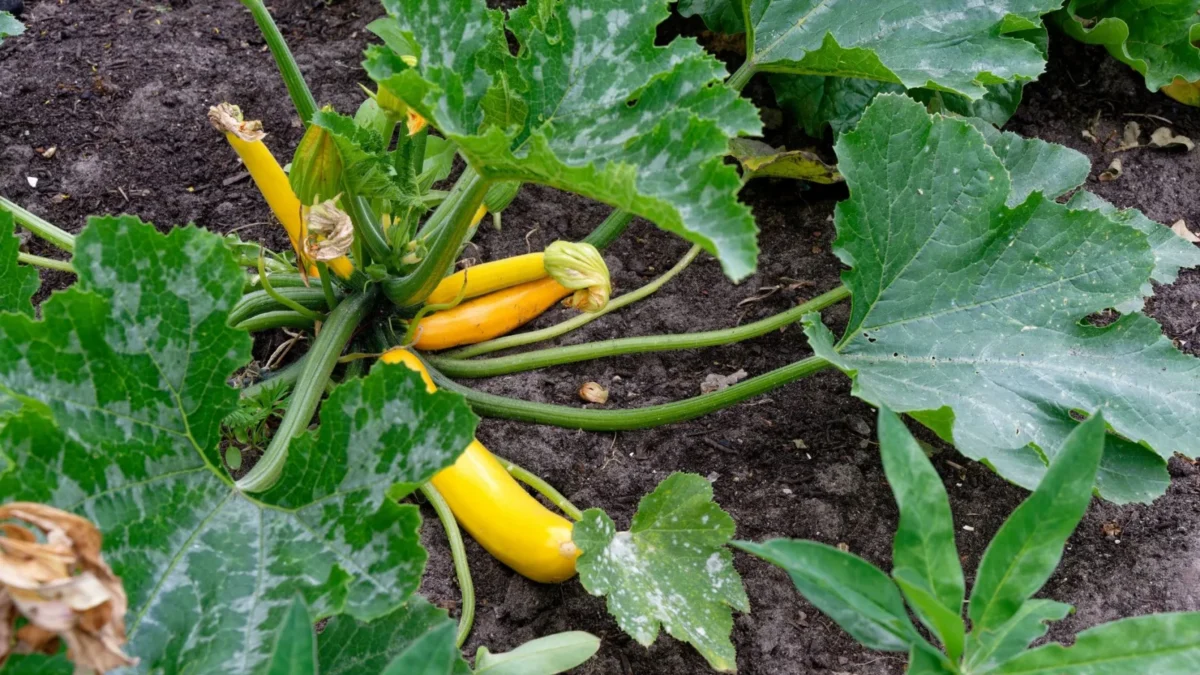
Quick answer: Zucchini leaves turning yellow usually signals one of a few issues: nutrient deficiency (especially iron or nitrogen), overwatering that damages roots, poor drainage, or powdery mildew. Each has a different look and fix, so identifying which one you’re dealing with is the first step to saving your plant.
| Botanical name | Cucurbita pepo var. cylindrica |
|---|---|
| Light | 8-10 hours direct sunlight daily; full sun (6+ hours minimum) |
| Watering | Water when soil is dry 2 inches below surface; plentiful consistent moisture until fruits fill out |
| Temperature | Soil 65-70°F minimum for planting; optimal 70-95°F for germination |
| Soil | Well-drained, fertile, loose, organically rich; pH 6.0-6.5; moisture retentive |
| Feeding | Balanced 10-10-10 initially; avoid excess nitrogen; side-dress when female flowers appear |
| Size | 1-5 feet tall; 2-25 feet wide or long depending on cultivar |
| Difficulty | easy |
| Cats | ✓ non-toxic |
| Dogs | ✓ non-toxic |
Most common causes of yellow zucchini leaves
Nutrient deficiencies top the list. The pattern tells you which nutrient is missing: if only the newest leaves at the growing tips turn yellow while older leaves stay green, you likely have an iron deficiency. The yellowing will show green veins running through it. If the whole plant, both old and new leaves, turns a uniform pale yellow-green, nitrogen is the culprit.
Overwatering is the second major cause. Zucchini needs consistent moisture, but not waterlogged soil. The difference matters: plentiful and consistent moisture is required from when plants emerge until fruits start to fill out, but too much water washes nutrients away from young roots and may cause rot. Check the soil two inches down—if it’s still wet, hold off watering.
Poor drainage or compacted roots create the same soggy, oxygen-starved conditions that lead to yellowing. If your soil holds water too long or roots are cramped, they can’t absorb nutrients properly, even if they’re present.
Powdery mildew, a common zucchini disease, produces pale yellow spots on leaves alongside white powdery patches. Unlike other fungal diseases, powdery mildew doesn’t need rain to spread—high humidity or dew for 2 or more hours is enough.
How to fix yellowing by cause
For iron deficiency: Apply a chelated liquid iron fertilizer directly to the foliage—this is the best way to manage iron deficiency, especially if your soil is alkaline or high in pH. Spray the new, expanding leaves in spring for best results. After application, plants improve significantly.
For nitrogen deficiency: Apply nitrogen fertilizer to correct the yellowing. However, avoid excess nitrogen: zucchini is very sensitive to it and may significantly delay flowering if it gets too much. The sweet spot is a balanced 10-10-10 initial application, then side-dress when female flowers appear.
For overwatering: Switch to deep, infrequent watering that moistens the entire root zone without waterlogging. The frequency depends on your soil: sandy soils may need watering twice a week, while clay or loamy soils rich in organic matter do fine with once a week. Use a drip hose or soaker hose to water the soil only, never spray the foliage. Mulch helps retain water and may reduce how often you need to water.
For poor drainage: Raised beds ensure the good drainage these plants need. Soil should be well-drained, fertile, loose, and organically rich with a pH between 6.0 and 6.5. If you’re in a container, use multiple drainage holes to prevent waterlogging.
For powdery mildew: Act fast—apply fungicides as soon as you spot the first white spots and repeat every 7–10 days. Once leaves are heavily covered, chemical control won’t work anymore. Improve air circulation around plants to reduce humidity in the canopy. After harvest, remove all plant debris; powdery mildew overwinters on dead material.
Preventing yellow leaves going forward
Water at soil level using drip or soaker hoses, keeping leaves dry to prevent both disease and nutrient-washing issues. Space plants adequately—3 feet apart for bush varieties—to ensure good air circulation. Start with fertile, well-drained soil rich in organic matter at the right pH. Use a balanced initial fertilizer, then side-dress when flowers appear, avoiding late-season nitrogen boosts. Check soil moisture two inches down before watering, and remember that the plant would rather receive one thorough watering than multiple shallow ones.
Read the full guide: Zucchini Care: The Complete Growing Guide
Was this article helpful?
More about Zucchini
The same problem in other plants
- Why Are My Carrot Tops Turning Yellow?
- Lettuce Leaves Turning Yellow: Causes and Fixes
- Bell Pepper Leaves Turning Yellow: Causes and Fixes
- Why Are My Cucumber Leaves Turning Yellow?