
Zucchini Cucurbita pepo var. cylindrica
Why Is My Zucchini Plant Only Producing Male Flowers?
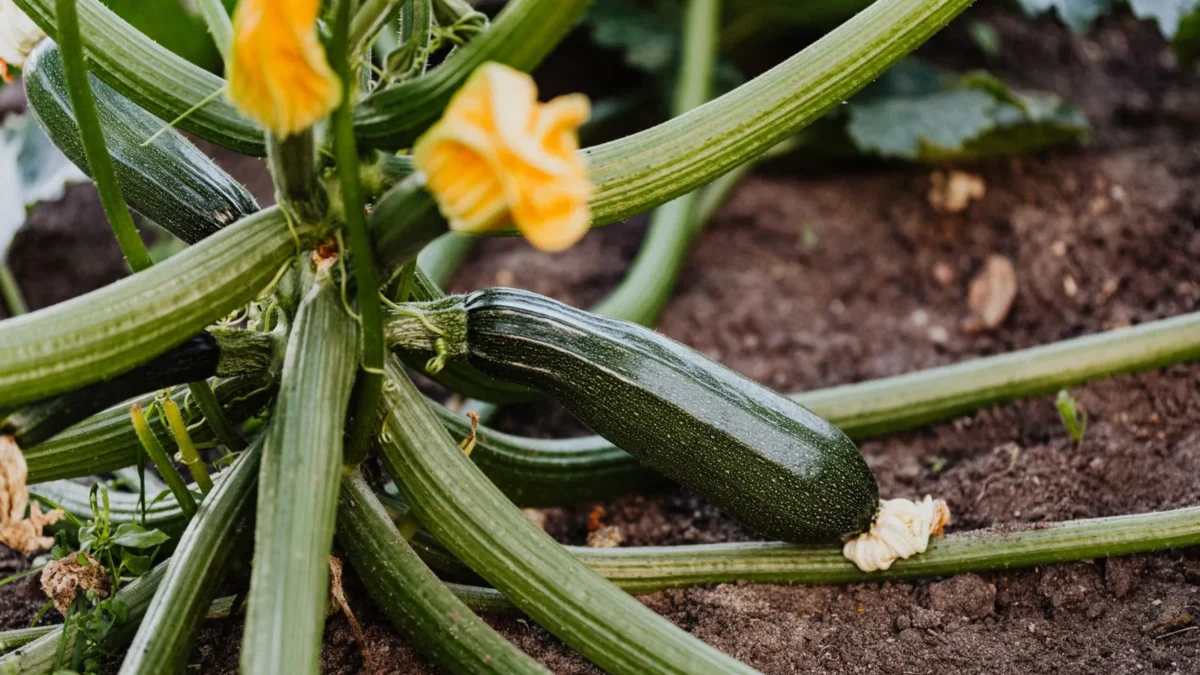
Quick answer: Zucchini plants naturally produce far more male flowers than female ones—this is normal. However, excess nitrogen fertilizer can delay or prevent female flower production entirely. If you’re seeing only male flowers, cut back nitrogen and ensure consistent watering and full sun.
| Botanical name | Cucurbita pepo var. cylindrica |
|---|---|
| Light | 8-10 hours direct sunlight daily; full sun (6+ hours minimum) |
| Watering | Water when soil is dry 2 inches below surface; plentiful consistent moisture until fruits fill out |
| Temperature | Soil 65-70°F minimum for planting; optimal 70-95°F for germination |
| Soil | Well-drained, fertile, loose, organically rich; pH 6.0-6.5; moisture retentive |
| Feeding | Balanced 10-10-10 initially; avoid excess nitrogen; side-dress when female flowers appear |
| Size | 1-5 feet tall; 2-25 feet wide or long depending on cultivar |
| Difficulty | easy |
| Cats | ✓ non-toxic |
| Dogs | ✓ non-toxic |
It’s usually just the plant’s normal flowering order, not a problem
Every zucchini plant produces both male flowers (which make pollen) and female flowers (which receive it and go on to form fruit), but they don’t appear at the same time. Plants almost always open a run of male flowers first — often a week or two of nothing but males — before the first female flowers appear. If your plant is still young or has only recently started flowering, seeing only males for a while is completely normal and simply means female flowers are still on the way.
Too much nitrogen is the main cause of a real delay
If male-only flowering goes on much longer than expected, excess nitrogen is the most likely culprit. Zucchini is unusually sensitive to nitrogen and will significantly delay — or in some cases suppress — female flower production when it gets too much, especially late in the season.
The fix is to stop any extra nitrogen feeding and let the plant settle. A balanced 10-10-10 fertilizer worked into the soil before planting is normally enough on its own; any further feeding should be a light side-dressing or liquid feed timed to when female flowers actually begin to appear, not before. If you’ve been feeding generously because growth looked slow, that’s very likely the problem — ease off rather than feeding more.
Other conditions that can push back female flowering
Zucchini needs full sun — at least 6 hours of direct light a day, with 8–10 hours ideal — to flower reliably. Inconsistent watering is another factor: the plant needs plentiful, steady moisture from the time it emerges right through fruit fill, and stress from drying out between waterings can delay flowering just as nitrogen excess does.
Water deeply when the soil is dry about two inches below the surface — on sandy, fast-draining soil that can mean twice a week, while heavier clay or loamy soil often only needs watering once a week. Always water at the base with a soaker or drip hose rather than overhead, since wet foliage invites fungal disease on top of whatever is already slowing the plant down.
Giving the plant room to flower properly
Crowded plants compete for light and airflow, which can also set back flowering. Space bush varieties about three feet apart, or in hills of two to three plants spaced three to four feet apart, with four to six feet between rows. Good spacing also reduces the humid, still conditions that favor powdery mildew, a disease that can further stress a plant that’s already slow to flower.
When female flowers finally appear
Once female flowers do open, they need a visiting pollinator — usually a bee — to move pollen from a male flower for fruit to actually set; if pollination fails, small fruit can form and then shrivel and drop. Keeping a healthy mix of male and female flowers open at the same time, and avoiding pesticide sprays during the day when bees are active, gives pollination the best chance of succeeding once your plant reaches that stage.
FAQ
How long is normal for a zucchini plant to produce only male flowers?
One to two weeks of male-only flowers after the plant starts blooming is typical. If it stretches well beyond that with no female flowers in sight, check your nitrogen feeding first.
Can I hand-pollinate to speed things along once female flowers appear?
Yes — once you have open male and female flowers at the same time, you can transfer pollen by hand with a small brush or by picking a male flower and brushing it directly onto the female flower’s center, which can help in gardens with few pollinators.
Is it safe for my dog or cat if they eat a zucchini flower or fruit?
Zucchini itself is non-toxic to both cats and dogs. The one exception is a squash that tastes unusually bitter — some home-garden squash can develop bitter compounds called cucurbitacins, and a bitter-tasting zucchini should be discarded rather than fed to a pet.
Read the full guide: Zucchini Care: The Complete Growing Guide
Was this article helpful?
More about Zucchini
The same problem in other plants
- Why Your Bell Pepper Won't Flower or Produce Fruit
- Why Your Cucumber Plants Aren't Producing Fruit
- Why Is My Tomato Not Turning Red?
- Why Are My Tomatoes Splitting and Cracking?
Sources
- Hot weather fertilizer tips for your yard and garden
- Growing Summer Squash (Zucchini) in a Home Garden
- Explore Cornell – Home Gardening – Vegetable Growing Guides – Growing Guide
Photo: https://kaboompics.com/ / Pexels, Pexels