
Tomato Solanum lycopersicum
Why Is My Tomato Not Turning Red?
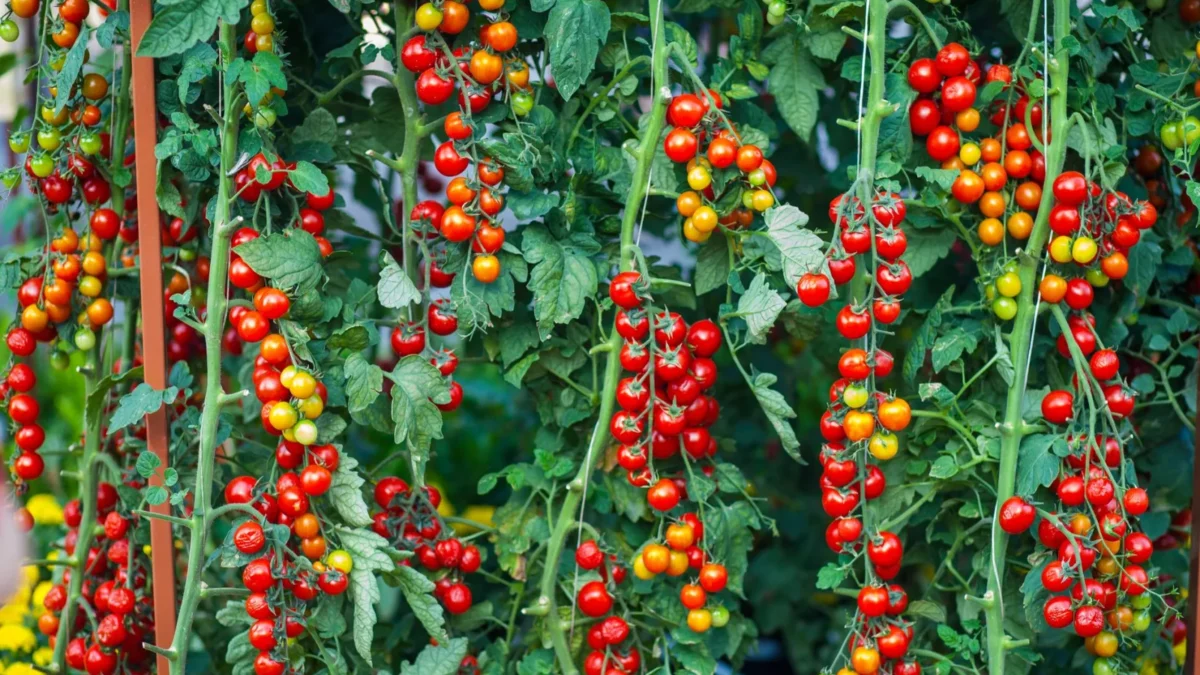
Quick answer: Your tomato is not turning red because of temperature problems, inconsistent watering, poor nutrition, or occasionally disease. Warm nights (55–75°F) are essential for ripening; temperatures above 90°F actually slow the process down. Fix the cause, and your tomatoes will ripen within days to weeks.
| Botanical name | Solanum lycopersicum |
|---|---|
| Light | Bright overhead light for seedlings; light not necessary for fruit ripening |
| Watering | Keep soil evenly moist; water deeply 1–2 inches weekly in-ground; daily for containers |
| Temperature | Night temperatures 55–75°F for fruit set; avoid temperatures above 90°F |
| Soil | Deep, loamy, well-drained soil with organic matter; pH 6.2–6.8 |
| Feeding | Regular liquid tomato food once fruits form, per manufacturer instructions |
| Difficulty | moderate |
| Cats | ⚠️ toxic — Leaves, stems, green fruit contain solanine; ripe fruit non-toxic |
| Dogs | ⚠️ toxic — Leaves, stems, green fruit contain solanine; ripe fruit non-toxic |
| What you see | Likely cause | What to do |
|---|---|---|
| Fruit stays green; flowers formed fine | Temperatures too hot (above 90°F) or too cold (below 55°F at night) | Provide afternoon shade in extreme heat; wait for cooler weather if it’s late summer |
| Fruit stays green; erratic watering | Uneven soil moisture | Water deeply and consistently—1–2 inches weekly for ground plants, daily for containers |
| Green fruit with yellowing leaves | Nitrogen deficiency or overwatering | Feed with liquid tomato food; check soil drainage |
| Slow ripening overall | Lack of fertilizer | Apply liquid tomato food regularly once fruits form |
| Fruit ripens very slowly late in season | Short growing season remaining | Pick fruit at the “breaker stage” (first blush of color) and ripen indoors |
Temperature is the main factor
Ripening speed depends much more on warmth than on light. Your tomato will not turn red if night temperatures drop below 55°F or consistently exceed 90°F. The ideal range is 55–75°F at night—that’s when the plant shifts energy toward coloring the fruit instead of leafy growth.
If you’re in a cool climate, wait for the warmest part of the season. In late summer, when nights cool down, ripening slows dramatically. At that point, pick tomatoes at the breaker stage (the first hint of color) and finish them indoors at room temperature—they’ll color up without the plant.
If heat is the problem (above 90°F), provide afternoon shade with a cloth or plant taller crops nearby. The plant is not damaged, but ripening pauses until it cools down.
Water and feed consistently
Erratic watering delays ripening and causes problems like blossom end rot. Keep the soil evenly moist: for in-ground tomatoes, water deeply 1–2 inches once a week. Container plants dry out fast, so water daily or even twice daily in hot weather.
Once fruit begins to form, feed regularly with a liquid tomato food following the manufacturer’s instructions. This supply of nutrients is essential for color development and cannot be skipped if you want fast ripening.
Soil pH and variety
Tomato soil should be deep, loamy, and well-drained with a pH of 6.2–6.8. Poor soil slows nutrient uptake, which delays ripening.
Some varieties are naturally slower to ripen than others. Heirloom and beefsteak tomatoes often take longer than early determinate types. If you planted a late variety, it may just need more time—this is normal.
Read the full guide: Tomato Care: The Complete Growing Guide
Was this article helpful?
More about Tomato
The same problem in other plants
- Why Is My Zucchini Plant Only Producing Male Flowers?
- Why Is My Zucchini Not Producing Fruit?
- Why Your Cucumber Plants Aren't Producing Fruit