
Tomato Solanum lycopersicum
Tomato Leaf Diseases: How to Identify and Treat Fungal, Bacterial, and Viral Problems
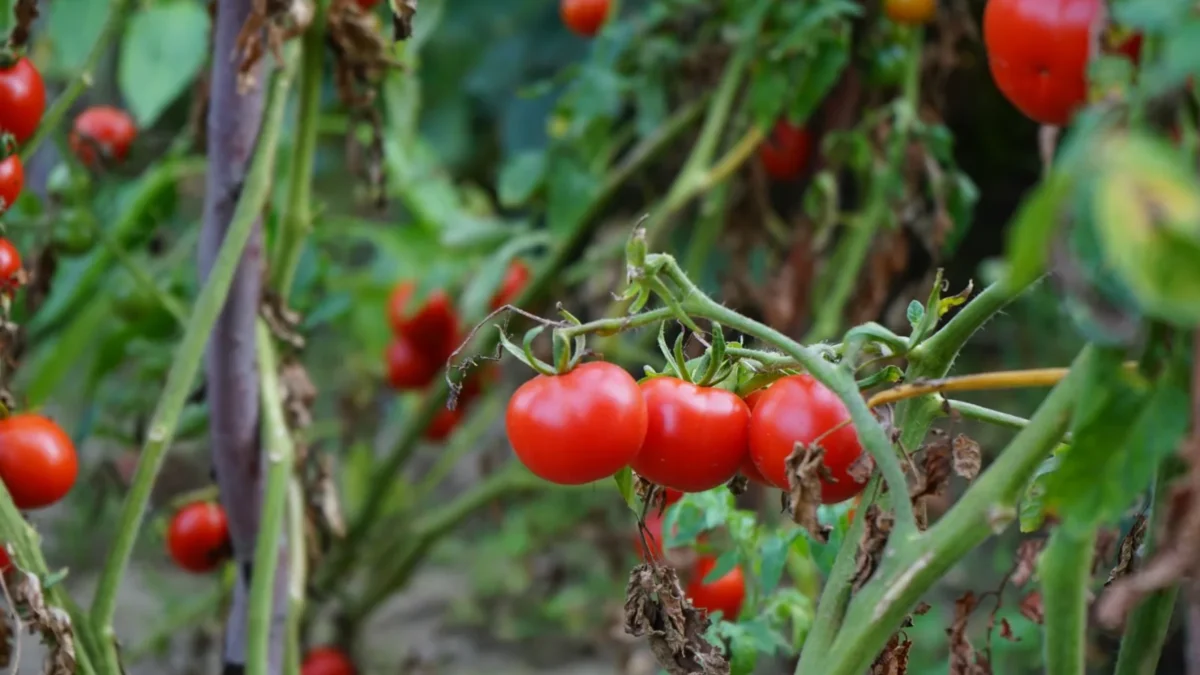
Quick answer: Tomato leaf diseases fall into three categories—fungal, bacterial, and viral—each with distinct symptoms and treatments. The most common is early blight, which shows dark brown spots with concentric rings and yellow halos. Diagnosing which disease you’re facing lets you act quickly before it spreads through your plant.
| Botanical name | Solanum lycopersicum |
|---|---|
| Light | Bright overhead light for seedlings; light not necessary for fruit ripening |
| Watering | Keep soil evenly moist; water deeply 1–2 inches weekly in-ground; daily for containers |
| Temperature | Night temperatures 55–75°F for fruit set; avoid temperatures above 90°F |
| Soil | Deep, loamy, well-drained soil with organic matter; pH 6.2–6.8 |
| Feeding | Regular liquid tomato food once fruits form, per manufacturer instructions |
| Difficulty | moderate |
| Cats | ⚠️ toxic — Leaves, stems, green fruit contain solanine; ripe fruit non-toxic |
| Dogs | ⚠️ toxic — Leaves, stems, green fruit contain solanine; ripe fruit non-toxic |
| What you see | Likely cause | What to do |
|---|---|---|
| Dark brown spots with concentric rings and yellow halos, starting on lower leaves | Early blight (Alternaria fungus) | Remove infected leaves, improve air circulation, water at the base only, avoid overhead watering |
| Yellow areas between leaf veins while veins stay green | Magnesium deficiency | Apply magnesium sulfate (Epsom salt) solution; check soil pH is 6.2–6.8 |
| Yellowing on younger leaves only | Iron deficiency | Apply iron chelate; verify soil pH isn’t too high |
| Yellow leaves starting at bottom and moving upward | Nitrogen deficiency | Feed with liquid tomato food as soon as fruits form |
| Yellow leaves despite regular watering | Overwatering/waterlogged soil | Reduce watering frequency; ensure soil drains well |
| Curled or rolled leaves with no spots or yellowing | Heat stress or inconsistent watering | Water deeply 1–2 inches weekly, adjust for container plants |
Telling fungal leaf diseases apart
Early blight typically appears first on the lowest leaves and moves upward as the season progresses. The characteristic target-like pattern with concentric rings is unmistakable once you know what to look for. Late blight, by contrast, causes larger water-soaked lesions that can cover whole leaflets rapidly, especially in cool, wet conditions. Septoria leaf spot creates tiny circular lesions with dark borders and gray centers.
The key to managing any fungal disease is removing infected leaves as soon as you spot them, improving air circulation around the plant, and watering only at the soil level—never overhead. Fungal spores spread on water droplets, so wet foliage is an invitation to disease.
Viral and bacterial tomato diseases
Viral diseases like tomato mosaic virus and yellow leaf curl virus cause stunted growth and leaf curling, and they’re spread by insect pests such as whiteflies. If you suspect a virus, remove the entire plant to prevent it spreading to neighbors. Bacterial diseases are harder to treat once established, so focus on prevention: avoid working in your garden when plants are wet (you can spread bacteria on your hands and tools), and remove any suspicious plants promptly.
Prevent tomato leaf diseases before they start
Maintain consistent soil moisture by watering deeply and regularly—overwatering creates conditions fungi love, while underwatering stresses plants and makes them more vulnerable. Space plants far enough apart for good air movement, remove lower leaves as the plant grows to reduce disease pressure, and mulch the soil to prevent spores from splashing up onto foliage. If diseases appeared last year, avoid planting tomatoes in the same spot, since some fungal spores survive in the soil.
Read the full guide: Tomato Care: The Complete Growing Guide
Was this article helpful?
More about Tomato
The same problem in other plants
- Bell Pepper Diseases: Identification, Pictures, and Treatment
- Common Zucchini Diseases and Treatment
- Cucumber Diseases: Prevention and Treatment
- Basil Diseases: Symptoms, Pictures, and Treatment
Sources
- Why are my tomato plant leaves turning yellow? 5 steps to save your harvest
- Why Are My Tomato Leaves Turning Yellow? Causes & Fixes
- How to grow Tomatoes
Photo: Nicolae Holbea / Pexels, Pexels