
Basil Ocimum basilicum
Basil Diseases: Symptoms and Treatment Guide
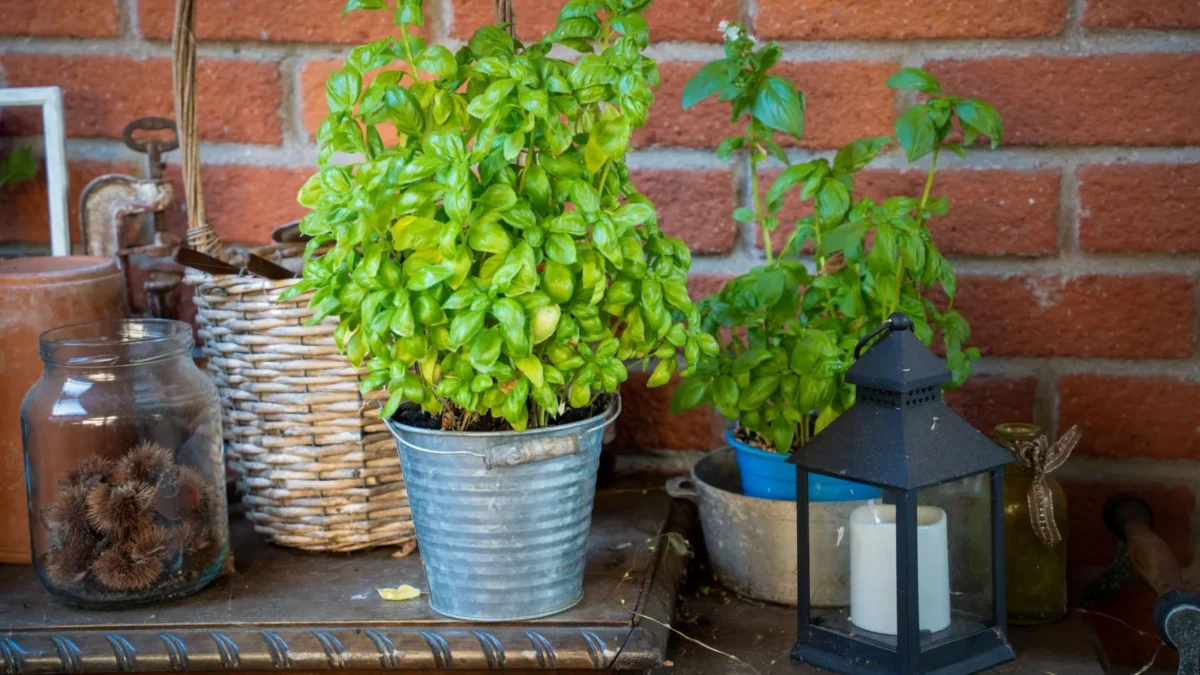
Quick answer: Basil’s most serious disease is downy mildew, which causes pale yellow areas on upper leaves and velvety grey fuzz underneath. Other problems include nitrogen deficiency, cold damage, and pest-related issues. Most basil diseases stem from moisture on foliage, poor air circulation, or incorrect watering.
| Botanical name | Ocimum basilicum |
|---|---|
| Light | 6-8 hours direct sun daily; benefits from afternoon shade; 12 hours artificial light indoors |
| Watering | Water when soil is dry 1/2 inch below surface; water often to prevent wilting |
| Temperature | 60-80°F (15.5-27°C); avoid temperatures below 40°F |
| Soil | Moist, well-drained soil; pH 6.0-7.5; avoid heavy clay and overly fertile sites |
| Feeding | Soluble fertilizer frequently; especially when lower leaves yellow from nitrogen deficiency |
| Size | 8-10 inches (Spicy Globe); 15 inches (Lettuce Leaf); varies by variety |
| Difficulty | easy |
| Cats | ✓ non-toxic |
| Dogs | ✓ non-toxic |
| What you see | Likely cause | What to do |
|---|---|---|
| Pale yellow patches on top leaves; grey fuzzy growth underneath | Downy mildew | Remove affected leaves; improve air flow; switch to resistant varieties like Thai or lemon basil |
| Yellow leaves at the bottom of the plant | Nitrogen deficiency | Apply soluble fertilizer; repeat frequently |
| Discolored or blackened leaves | Cold exposure (below 40°F) | Move plants to warmth; ensure 60–80°F temperature |
| Wilting despite watering | Overwatering or poor drainage | Water when soil is dry 1/2 inch below surface; ensure soil drains well |
| White spots or curled leaves | Thrips or other pests | Improve air circulation; avoid wetting foliage when watering |
Understanding Downy Mildew in Basil
Downy mildew is caused by Peronospora belbahrii, a water mold rather than a true fungus. It typically starts on the lower leaves and works its way up the plant, creating pale yellow areas on the top surface of leaves paired with a characteristic velvety grey coating on the underside.
All sweet basil varieties are highly susceptible to this disease. However, Thai basil, lemon basil, lime basil, purple basil, and spicy basil show greater resistance and are better choices if downy mildew has been a problem in your garden.
Preventing Basil Diseases
The best defense against basil diseases is prevention through proper growing conditions:
-
Water at the base, not overhead. Wet foliage creates the humid conditions downy mildew needs to thrive. Water early in the day and keep moisture off the leaves.
-
Space plants 12 to 18 inches apart. Good spacing allows rapid drying of dew and rainwater, reducing disease pressure.
-
Maintain proper moisture levels. Basil must be watered often enough to prevent wilting, but avoid standing water in saucers. For indoor herbs, water when soil is dry 1/2 inch below the surface. Outdoor container basil in hot weather may need daily watering.
-
Provide 6–8 hours of direct sun daily. Strong light improves essential oil content and overall plant vigor, helping basil resist disease. Afternoon shade is beneficial in very hot climates.
-
Keep temperatures between 60–80°F. Cool weather below 40°F will discolor leaves and dramatically slow growth. Basil is cold-sensitive and needs consistent warmth to thrive.
-
Feed regularly with soluble fertilizer. When lower leaves yellow from nitrogen deficiency, apply a soluble fertilizer promptly. Frequent feeding keeps your basil vigorous and better able to withstand stress.
FAQ
Can I treat downy mildew once it appears?
Remove affected leaves immediately to slow spread. Focus on preventing recurrence by avoiding overhead watering and improving air circulation around your plants.
Are basil diseases toxic to pets?
Basil itself is non-toxic to both dogs and cats. Any disease-related illness would come from the disease organism, not the plant.
Why are my basil leaves yellowing?
Yellowing at the bottom of the plant usually means nitrogen deficiency—apply soluble fertilizer. If yellowing appears with grey fuzz on leaf undersides, it’s downy mildew. Overwatering can also cause yellowing; ensure your soil drains well and water only when needed.
Read the full guide: Basil Care: The Complete Guide to Growing Healthy Plants Indoors and Outdoors
Was this article helpful?
More about Basil
The same problem in other plants
- Common Zucchini Diseases and Treatment
- Cucumber Diseases: Prevention and Treatment
- Tomato Leaf Diseases: Identification, Treatment, and Prevention
Sources
Photo: Gundula Vogel / Pexels, Pexels