
Basil Ocimum basilicum
Why Your Basil Is Turning Light Green, Purple, and Dark
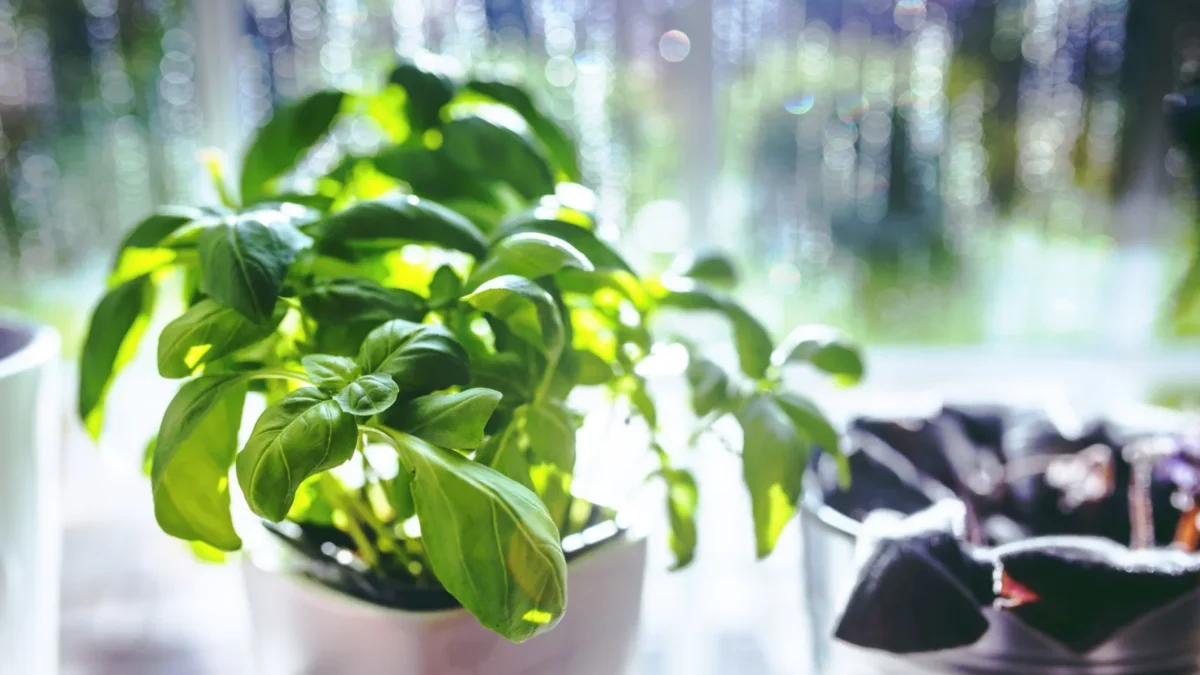
Quick answer: Basil turning light green usually signals a nitrogen deficiency, while cold temperatures below 40°F cause leaf discoloration and darkening, and purple tints appear naturally in certain varieties or can indicate cold stress.
| Botanical name | Ocimum basilicum |
|---|---|
| Light | 6-8 hours direct sun daily; benefits from afternoon shade; 12 hours artificial light indoors |
| Watering | Water when soil is dry 1/2 inch below surface; water often to prevent wilting |
| Temperature | 60-80°F (15.5-27°C); avoid temperatures below 40°F |
| Soil | Moist, well-drained soil; pH 6.0-7.5; avoid heavy clay and overly fertile sites |
| Feeding | Soluble fertilizer frequently; especially when lower leaves yellow from nitrogen deficiency |
| Size | 8-10 inches (Spicy Globe); 15 inches (Lettuce Leaf); varies by variety |
| Difficulty | easy |
| Cats | ✓ non-toxic |
| Dogs | ✓ non-toxic |
Light green leaves and nitrogen deficiency
When your basil fades to light green, especially on the lower leaves, the plant is running short of nitrogen. This happens because as the plant grows and you harvest leaves, it pulls nitrogen from older growth first.
The fix is simple: use a soluble fertilizer applied frequently. A liquid feed works fastest when nutrients are needed quickly, since it reaches the plant’s roots right away. Feed basil every week or two during the growing season, and watch the new growth return to darker, richer green within days.
Purple tints and cold damage
Basil’s color varies naturally by variety—some cultivars naturally display vivid purple or purple laced with gold. But if your normally green basil develops purple or dark discolored patches, cold is almost certainly the culprit. Temperatures below 40°F will discolor basil leaves.
Basil is a warm-season herb and is easily damaged by cold. Keep your plant between 60–80°F (15.5–27°C) for best growth. If nighttime temperatures drop, bring container basil indoors or protect outdoor plants with row covers. Once the plant recovers and new growth emerges in warmth, the discolored leaves won’t improve but the fresh foliage will be normal.
Darkening and blackening leaves
Blackening or very dark patches often signal disease rather than a simple nutrient or temperature issue. The most serious is downy mildew, which starts on lower leaves and moves upward, creating pale yellow areas on the top of the leaf and velvety grey fuzz underneath. This is harder to fix once established, so prevention is key.
Avoid overhead watering—water at the base of the plant instead. Space plants 12 to 18 inches apart to promote air circulation and rapid leaf drying after rain or dew. If you do spot downy mildew, remove affected leaves immediately and improve air flow. Some varieties like Thai, lemon, lime, and purple basil show better resistance than sweet basil varieties.
Keeping basil vibrant
Regular watering is essential—basil must be watered often enough to prevent wilting. Check the soil 1/2 inch below the surface; water when it feels dry at that depth. In hot weather, container plants may need daily watering.
Give your basil 6–8 hours of direct sun daily, with afternoon shade in very hot climates. Strong light increases essential oil production, which improves both flavor and the rich color you’re after.
Read the full guide: Basil Care: The Complete Guide to Growing Healthy Plants Indoors and Outdoors
Was this article helpful?