
Basil Ocimum basilicum
How to Grow Basil Outdoors: Sun, Soil, and Seasonal Care
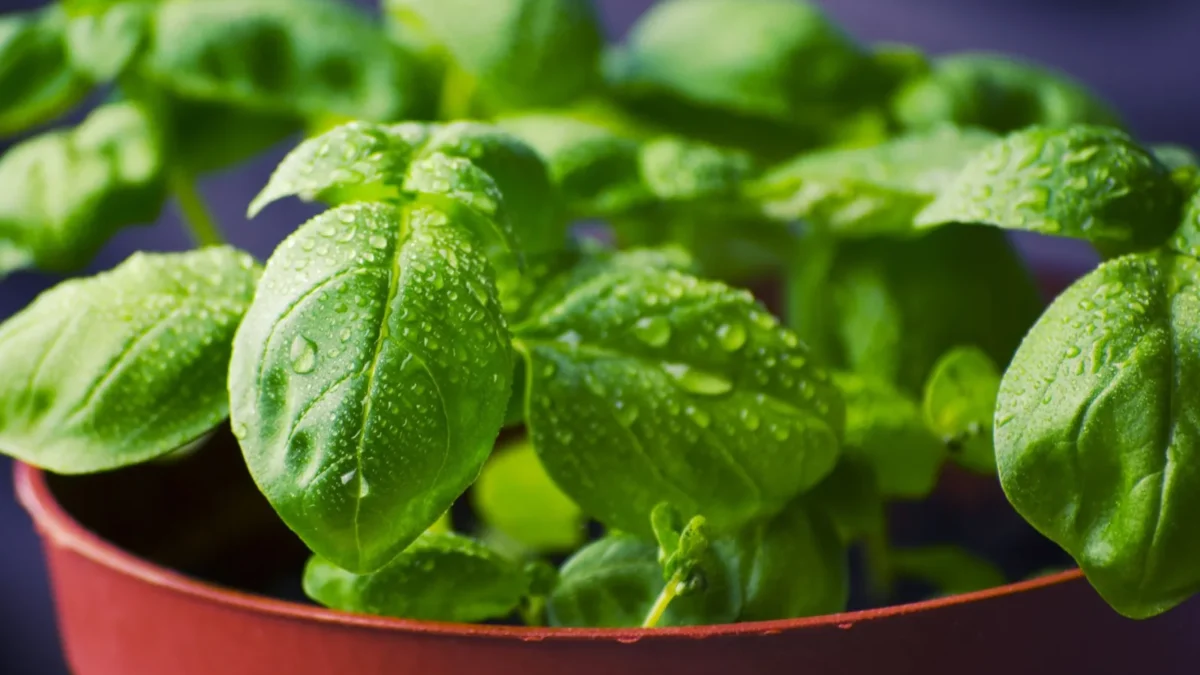
Quick answer: Grow basil outdoors in a sunny spot with 6–8 hours of direct sun daily, space plants 12–18 inches apart, and water deeply once per week to keep soil moist without waterlogging. Basil care outdoors also means protecting it from temperatures below 40°F, which will discolor leaves.
| Botanical name | Ocimum basilicum |
|---|---|
| Light | 6-8 hours direct sun daily; benefits from afternoon shade; 12 hours artificial light indoors |
| Watering | Water when soil is dry 1/2 inch below surface; water often to prevent wilting |
| Temperature | 60-80°F (15.5-27°C); avoid temperatures below 40°F |
| Soil | Moist, well-drained soil; pH 6.0-7.5; avoid heavy clay and overly fertile sites |
| Feeding | Soluble fertilizer frequently; especially when lower leaves yellow from nitrogen deficiency |
| Size | 8-10 inches (Spicy Globe); 15 inches (Lettuce Leaf); varies by variety |
| Difficulty | easy |
| Cats | ✓ non-toxic |
| Dogs | ✓ non-toxic |
Location and Light for Outdoor Basil
Basil thrives in full sun and produces the strongest flavor when given plenty of light. Position your garden bed or raised bed in a very sunny spot and space the plants far enough apart to allow rapid drying of dew and rain—this helps prevent disease. Afternoon shade is actually beneficial in very hot climates, protecting the foliage from stress while maintaining good growth.
Soil Preparation and Spacing
Basil grows best in moist, well-drained soil with a pH between 6.0 and 7.5. Avoid heavy clay soils and overly fertile sites; rich soils promote fast, lush growth but reduce the essential oils that give basil its flavor and aroma. Mix in compost or aged organic matter to improve drainage if your soil is clay-heavy.
Space plants 12–18 inches apart. If starting from seed directly outdoors, sow seeds after the danger of frost has passed; basil seeds need soil temperatures of at least 60°F to germinate. Young seedlings wither easily in intense sun the first week after emergence, so provide temporary shade during this period.
Watering Basil Outdoors
Water deeply once per week, soaking the soil to 8 inches. In hot weather, container-grown basil may need daily watering. Water at the base of the plant rather than overhead to keep foliage dry and reduce disease risk. Check that the soil is moist but never waterlogged—allow the top of the soil to dry slightly between waterings. Basil must be watered often enough to prevent wilting, but standing water in saucers will cause yellowing.
Fertilizing and Leaf Care
Fertilize basil frequently with a soluble fertilizer. If lower leaves turn yellow, nitrogen is likely depleted; a quick application of soluble fertilizer will restore vigor. Once the plant is established, pinch out the growing tips regularly to encourage bushier growth and more leaves. Remove flower heads as they appear to keep the plant productive; allowing basil to flower and seed will make it woody, bitter, and shorten its life.
Temperature and Winter Protection
Basil thrives in temperatures between 60–80°F. Any drop below 40°F will discolor the leaves, and cool weather dramatically slows growth. Since basil is an annual tender herb, plan to either harvest all foliage before the first frost or dig up plants to move indoors for continued growth under lights.
How often to water basil outdoors?
Water deeply once per week in normal conditions; in hot, dry weather or with container plants, daily watering may be needed. Always water when the top half-inch of soil feels dry.
Can basil survive frost?
No. Temperatures below 40°F will damage leaves and stop growth. Plant basil only after frost danger has passed and bring it inside or harvest before temperatures drop in fall.
What varieties are best outdoors?
Spicy Globe produces compact plants 8–10 inches tall, perfect for edging or borders. Lettuce Leaf grows taller at 15 inches with large, crinkled leaves ideal for salads. Both are easy to grow, though all sweet basil varieties are very susceptible to downy mildew; Thai, lemon, lime, and purple basil are less prone to this disease.
Read the full guide: Basil Care: The Complete Guide to Growing Healthy Plants Indoors and Outdoors
Was this article helpful?