
Basil Ocimum basilicum
Why Is My Basil Flowering and Should You Remove the Flowers
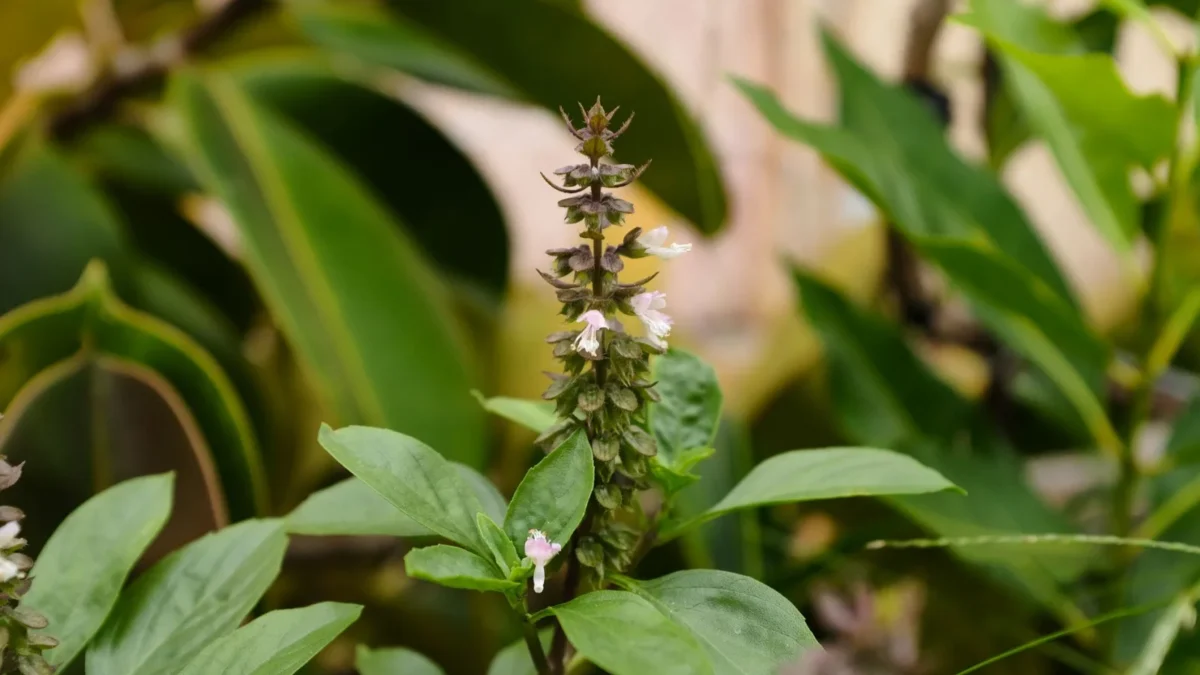
Quick answer: Basil flowers when it reaches maturity as part of its natural life cycle, especially in warm conditions. Pinching off the flowers redirects the plant’s energy into producing more leaves for longer harvests, since allowing your basil to seed makes it woody, less productive and somewhat bitter while shortening its life.
| Botanical name | Ocimum basilicum |
|---|---|
| Light | 6-8 hours direct sun daily; benefits from afternoon shade; 12 hours artificial light indoors |
| Watering | Water when soil is dry 1/2 inch below surface; water often to prevent wilting |
| Temperature | 60-80°F (15.5-27°C); avoid temperatures below 40°F |
| Soil | Moist, well-drained soil; pH 6.0-7.5; avoid heavy clay and overly fertile sites |
| Feeding | Soluble fertilizer frequently; especially when lower leaves yellow from nitrogen deficiency |
| Size | 8-10 inches (Spicy Globe); 15 inches (Lettuce Leaf); varies by variety |
| Difficulty | easy |
| Cats | ✓ non-toxic |
| Dogs | ✓ non-toxic |
When and why basil starts flowering
Basil flowers as it matures, which happens fairly quickly during the growing season. Once the plant gets established and temperatures stay warm—ideally between 60–80°F—flowering often follows within weeks of reaching a good size for harvest.
Flowering is a biological trigger: the plant is shifting from leaf production into reproduction mode. This happens naturally in annuals like basil, and it accelerates once the plant senses ideal growing conditions. Basil needs 6–8 hours of sun daily and benefits from some afternoon shade, but consistent warmth and daylight can push it toward blooming faster.
Remove flowers to extend your harvest
Many herbs have the best flavor if harvested just before flowering, so the moment you see flower buds forming is actually an ideal time to pick. Pinch out flowerheads as they appear to ensure continued leaf growth. This simple action keeps the plant focused on producing tender, harvestable leaves instead of seeds.
If you allow flowers to develop and set seed, the plant’s priority shifts entirely. Annual herbs like basil become woody, less productive and somewhat bitter if allowed to seed, and seed production shortens the plant’s life. A basil plant that flowers and seeds out will decline quickly and stop giving you usable leaves.
Should you let basil flower for seeds?
Letting basil flower and collect seeds only makes sense if you’re planning to grow basil again next year and want your own seed supply. To collect seeds, place a paper bag around the hanging herb with holes in the side for air circulation; as they dry, the seeds will collect on the bottom of the bag.
If you’re growing basil for this season’s cooking, remove all flowers as soon as they appear. The payoff—weeks of tender leaves—far outweighs the benefit of seeds from a single plant. Once the weather cools or the plant ages significantly, it will eventually flower anyway, and you can let a few flowerheads go to seed at the very end of the season if you wish.
Read the full guide: Basil Care: The Complete Guide to Growing Healthy Plants Indoors and Outdoors
Was this article helpful?
More about Basil
The same problem in other plants
Sources
Photo: Nguyen Truong Khang / Pexels, Pexels