
Basil Ocimum basilicum
How to Grow Basil Indoors: Light, Water, and Care
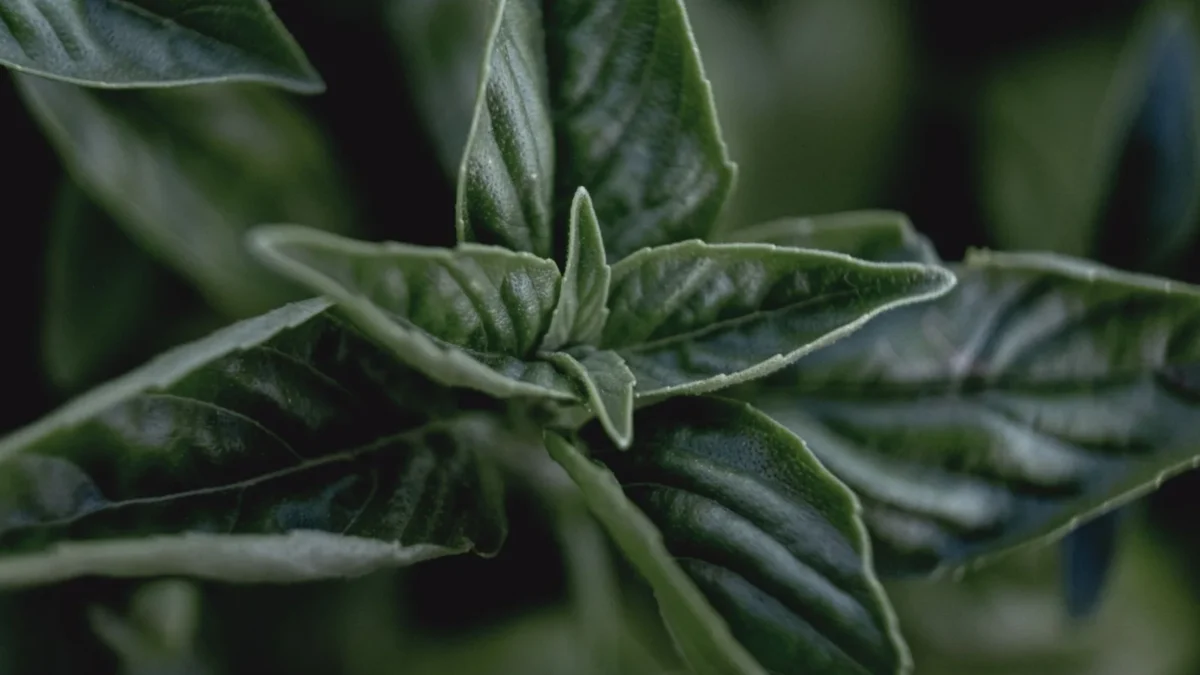
Quick answer: Basil care indoors revolves around three essentials: 12 hours of artificial light daily, watering when the soil is dry 1/2 inch below the surface, and keeping temperatures between 60–80°F. With these in place, you’ll have tender leaves ready to harvest in about a month.
| Botanical name | Ocimum basilicum |
|---|---|
| Light | 6-8 hours direct sun daily; benefits from afternoon shade; 12 hours artificial light indoors |
| Watering | Water when soil is dry 1/2 inch below surface; water often to prevent wilting |
| Temperature | 60-80°F (15.5-27°C); avoid temperatures below 40°F |
| Soil | Moist, well-drained soil; pH 6.0-7.5; avoid heavy clay and overly fertile sites |
| Feeding | Soluble fertilizer frequently; especially when lower leaves yellow from nitrogen deficiency |
| Size | 8-10 inches (Spicy Globe); 15 inches (Lettuce Leaf); varies by variety |
| Difficulty | easy |
| Cats | ✓ non-toxic |
| Dogs | ✓ non-toxic |
Light for Indoor Basil
Basil is a light-hungry plant. Under natural sunlight, it needs 6–8 hours of direct sun daily and benefits from afternoon shade. Indoors without access to a sunny window, you’ll need artificial grow lights. Position the lights 3–6 inches above the foliage and keep them on for about 12 hours per day. If you have a bright south or west-facing window, you may get away with supplementing natural light rather than relying entirely on bulbs.
Watering and Soil Setup
Indoor basil’s thirst is straightforward: water when the soil feels dry 1/2 inch below the surface. Stick your finger into the pot to check—this saves guesswork. Don’t let the plant wilt. The soil itself should be moist but well-drained; use a pot with drainage holes and a light potting mix rather than garden soil.
Soil pH between 6.0 and 7.5 works best. Avoid heavy clay and overly rich soils, which encourage weak, leafy growth at the expense of flavor. Let excess water drain completely from the pot—never let it sit in standing water in a saucer, as this invites root rot.
Temperature and Fertilizer
Keep your indoor space between 60–80°F. Anything colder will slow growth dramatically and discolor the leaves.
Water and fertilize basil frequently as it grows. When the lower leaves start turning yellow—a sign of nitrogen deficiency—apply a soluble fertilizer. This fast-acting approach gives the plant what it needs without waiting for slow-release options to work.
Harvesting and Ongoing Care
Basil is ready to pick about a month after sowing. Harvest leaves when they’re still tender, and mid-morning is the best time—oil content peaks then. Pinch off flower buds as they appear to keep energy flowing into leaf production rather than seeds. If allowed to flower and seed, the plant becomes woody and bitter.
Spicy Globe is particularly good for indoor growing because it’s slower to bolt than other varieties. It reaches 8–10 inches tall and stays compact. For larger leaves, Lettuce Leaf basil grows to 15 inches.
How often to water basil indoors?
Check the soil every 1–2 days. Water when it’s dry 1/2 inch down—this might mean every 2–3 days depending on pot size, light intensity, and room temperature. In winter, growth slows and you’ll water less frequently.
Is basil toxic to pets?
No. Basil is safe for both dogs and cats, so it’s worry-free to grow around curious animals.
What if leaves turn yellow?
Yellow lower leaves usually mean nitrogen shortage; feed with a soluble fertilizer. If yellowing is widespread and followed by wilting, you’re likely overwatering—pull back slightly and ensure water drains freely.
Read the full guide: Basil Care: The Complete Guide to Growing Healthy Plants Indoors and Outdoors
Was this article helpful?