
Basil Ocimum basilicum
Why Are My Basil Leaves So Small? Common Causes and Solutions
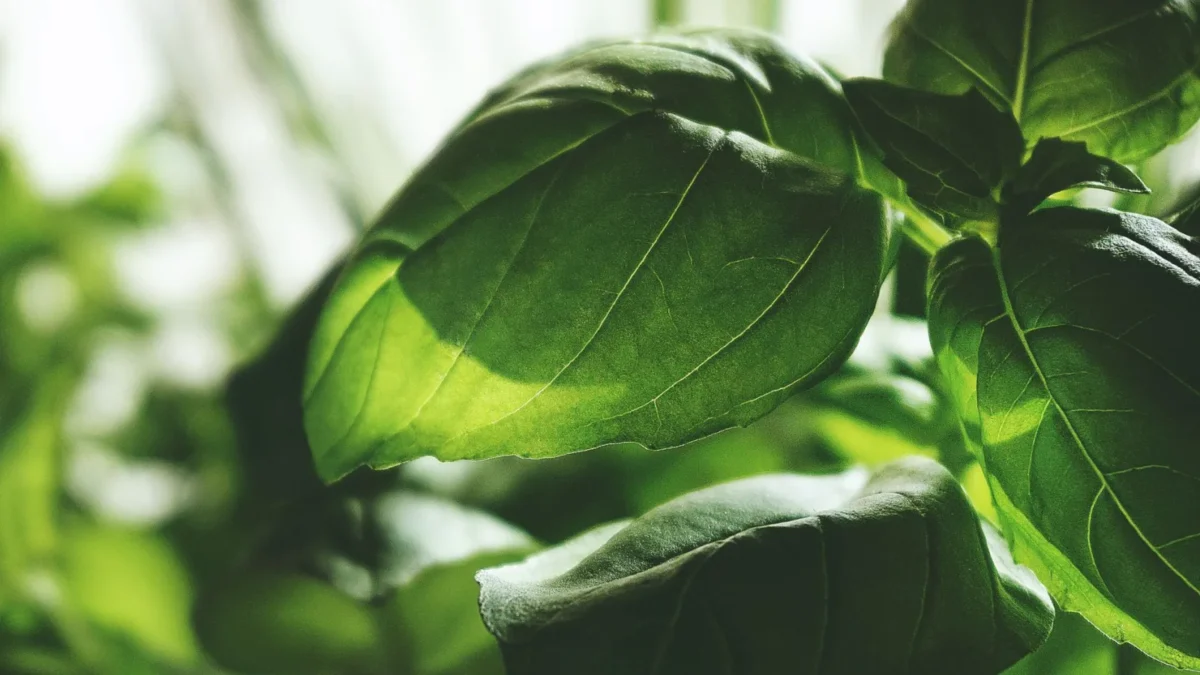
Quick answer: Small basil leaves usually come from too little light, nitrogen deficiency, cold temperatures, overcrowding, or inconsistent watering. Each has a straightforward fix that will get your basil producing full-sized leaves again.
| Botanical name | Ocimum basilicum |
|---|---|
| Light | 6-8 hours direct sun daily; benefits from afternoon shade; 12 hours artificial light indoors |
| Watering | Water when soil is dry 1/2 inch below surface; water often to prevent wilting |
| Temperature | 60-80°F (15.5-27°C); avoid temperatures below 40°F |
| Soil | Moist, well-drained soil; pH 6.0-7.5; avoid heavy clay and overly fertile sites |
| Feeding | Soluble fertilizer frequently; especially when lower leaves yellow from nitrogen deficiency |
| Size | 8-10 inches (Spicy Globe); 15 inches (Lettuce Leaf); varies by variety |
| Difficulty | easy |
| Cats | ✓ non-toxic |
| Dogs | ✓ non-toxic |
| What you see | Likely cause | What to do |
|---|---|---|
| Small leaves overall, slow growth | Insufficient light | Move plant to get 6–8 hours direct sun daily or add 12 hours of artificial light for indoor plants |
| Small leaves, lower leaves yellowing first | Nitrogen deficiency | Apply soluble fertilizer frequently |
| Small, slow-growing leaves, especially in winter | Temperature too cold | Keep basil between 60–80°F; temperatures below 40°F will slow growth significantly |
| Stunted leaves, plants crowded together | Poor spacing | Space plants 12–18 inches apart to allow air circulation |
| Wilted, yellowed leaves or stunted growth | Watering inconsistency | Water when soil is dry 1/2 inch below surface indoors; keep soil moist but not waterlogged |
Light is the biggest factor
Basil needs 6–8 hours of direct sun daily, with afternoon shade if it’s very hot. Without enough light, the plant responds by growing slowly and producing smaller leaves. If you’re growing basil indoors, provide 12 hours of artificial light to compensate. Position your grow light or lamp close to the plant—6 to 12 inches away works well—and keep it on a timer to maintain consistent hours.
Temperature and watering matter just as much
Basil is tender and hates the cold; cool weather dramatically slows its growth rate. Keep the temperature between 60–80°F. If it drops below 40°F, your basil’s leaves will discolor and growth will nearly stop.
Water consistency is equally important. Indoors, check soil moisture by pushing your finger into the top inch—water when the soil is dry 1/2 inch below the surface. Outdoors in containers, you may need to water daily in hot weather. The goal is to keep soil moist without letting the plant sit in soggy soil. Basil must be watered often enough to prevent wilting.
Nitrogen deficiency and spacing
If the lower leaves are yellowing while new growth stays small, your basil is likely short on nitrogen. Apply a soluble fertilizer frequently to correct this quickly.
Plants spaced too close together compete for light and air circulation, resulting in stunted leaves. Space them 12–18 inches apart to give each one room to flourish.
Soil quality and ongoing care
Basil grows best in moist, well-drained soil with a pH between 6.0 and 7.5. Avoid heavy clay and overly fertile sites—rich soil actually promotes faster but less flavorful growth. Water at the base of the plant rather than overhead, as wet foliage invites disease.
Once your plant is established and growing well, pinch out flower buds as they appear. This redirects energy into leaf production rather than seeds, keeping your basil compact and productive with full-sized leaves.
Read the full guide: Basil Care: The Complete Guide to Growing Healthy Plants Indoors and Outdoors
Was this article helpful?
More about Basil
The same problem in other plants
- Lettuce Not Growing Bigger or Faster
- Why Is My Lettuce Not Growing?
- Why Your Bell Pepper Plant Is Not Growing and How to Fix It
- Zucchini Not Growing? Troubleshoot Slow Growth and Leggy Plants
Sources
Photo: Suzy Hazelwood / Pexels, Pexels