
Basil Ocimum basilicum
Why Are My Basil Leaves Curling: Causes and How to Fix Them
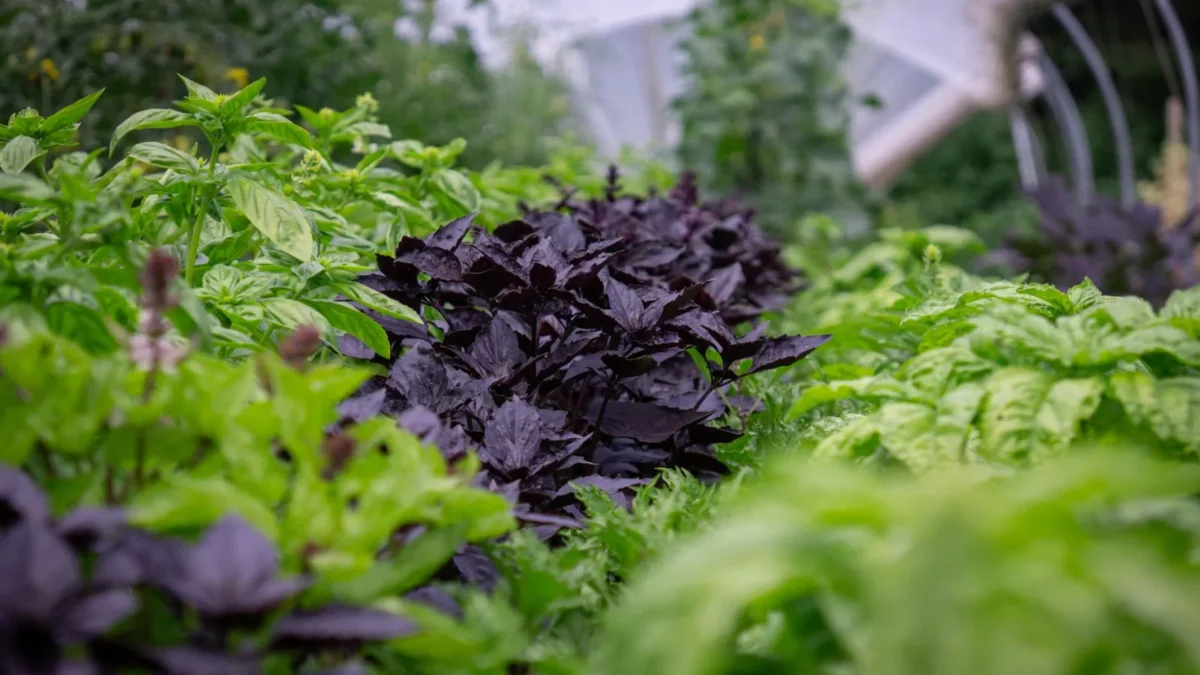
Quick answer: Basil leaves curl most often from thrips (tiny insects that cause white spots and curling), temperature stress below 40°F, downy mildew disease, or sometimes low humidity and pest damage. The fix depends on the cause, but improving light, watering, spacing, and temperature will prevent most problems.
| Botanical name | Ocimum basilicum |
|---|---|
| Light | 6-8 hours direct sun daily; benefits from afternoon shade; 12 hours artificial light indoors |
| Watering | Water when soil is dry 1/2 inch below surface; water often to prevent wilting |
| Temperature | 60-80°F (15.5-27°C); avoid temperatures below 40°F |
| Soil | Moist, well-drained soil; pH 6.0-7.5; avoid heavy clay and overly fertile sites |
| Feeding | Soluble fertilizer frequently; especially when lower leaves yellow from nitrogen deficiency |
| Size | 8-10 inches (Spicy Globe); 15 inches (Lettuce Leaf); varies by variety |
| Difficulty | easy |
| Cats | ✓ non-toxic |
| Dogs | ✓ non-toxic |
What causes basil leaves to curl
| What you see | Likely cause | What to do |
|---|---|---|
| Tiny white or pale spots, leaves curling, small brown insects (1 mm) on leaves | Thrips damage | Spray undersides of leaves with water; improve air circulation by spacing plants 12–18 inches apart |
| Yellowing starting on lower leaves, moving up | Nitrogen deficiency | Apply soluble fertilizer |
| Pale yellow areas on upper leaf surface, gray velvety fuzz underneath, curling | Downy mildew | Water at soil level only, avoid wetting foliage; switch to resistant varieties like Thai or lemon basil |
| Curled leaves after cold snap, leaf discoloration | Temperature below 40°F | Move plant indoors or protect; keep basil at 60–80°F |
| Wilted, curled leaves, soil feels dry | Insufficient watering | Water when soil is dry 1/2 inch below surface (indoors) or deeply once weekly (outdoors, 8 inches deep) |
| Small soft-bodied insects on undersides, distorted or yellowing leaves | Aphids | Spray with water or insecticidal soap; improve spacing for air flow |
Thrips are the most common culprit. These minute brown insects live on the undersides of leaves and damage the tissue inside, causing white spots or curling as air fills the damaged cells. You’ll see them move when you flip a leaf over.
Downy mildew, the most serious basil disease, starts on lower leaves and moves upward with yellowing on top and gray fuzzy growth underneath. This water mold thrives in wet foliage and high humidity. Never use overhead watering; water at the base only. All sweet basil varieties are very susceptible, so if downy mildew appears, switch to Thai basil, lemon basil, or lime basil varieties.
Cold damage happens fast— temperatures below 40°F will discolor and curl leaves. Basil is easily damaged in cold, and cool weather dramatically slows growth. Keep your plant between 60–80°F, which is achievable outdoors in summer but requires moving potted basil indoors or under cover in cooler months.
Under-watering causes wilting and leaf curling. Basil must be watered often enough so plants do not wilt. For indoor plants, water when soil is dry 1/2 inch below the surface; for outdoor gardens, soak the soil to 8 inches once weekly. In hot weather, outdoor containers may need daily watering.
How to prevent basil leaves curling up
Start with the right conditions. Give basil 6–8 hours of sun daily and afternoon shade benefits. Plant in a very sunny site with plants spaced far enough apart to promote rapid leaf drying from dew and rainfall. Grow basil in moist but well-drained soil with pH between 6.0 and 7.5, avoiding heavy clay and overly fertile sites.
Water correctly— water by hand at the base of each plant and do not wet the foliage, as it becomes more prone to disease. Water and fertilize basil frequently. If lower leaves start to yellow, it signals nitrogen deficiency, so use a soluble fertilizer for quick recovery.
Keep air moving around the plants. Good spacing prevents both disease and pest buildup. If you spot thrips early and keep leaves dry with base-level watering, you’ll stop most problems before they cause noticeable curling.
Read the full guide: Basil Care: The Complete Guide to Growing Healthy Plants Indoors and Outdoors
Was this article helpful?
More about Basil
The same problem in other plants
- Why Lettuce Leaves Are Curling
- Why Are My Bell Pepper Leaves Curling?
- Why Are My Tomato Leaves Curling Inward?
Sources
Photo: Christoph Hanssen / Pexels, Pexels