
Tomato Solanum lycopersicum
Why Are My Tomato Leaves Turning Purple?
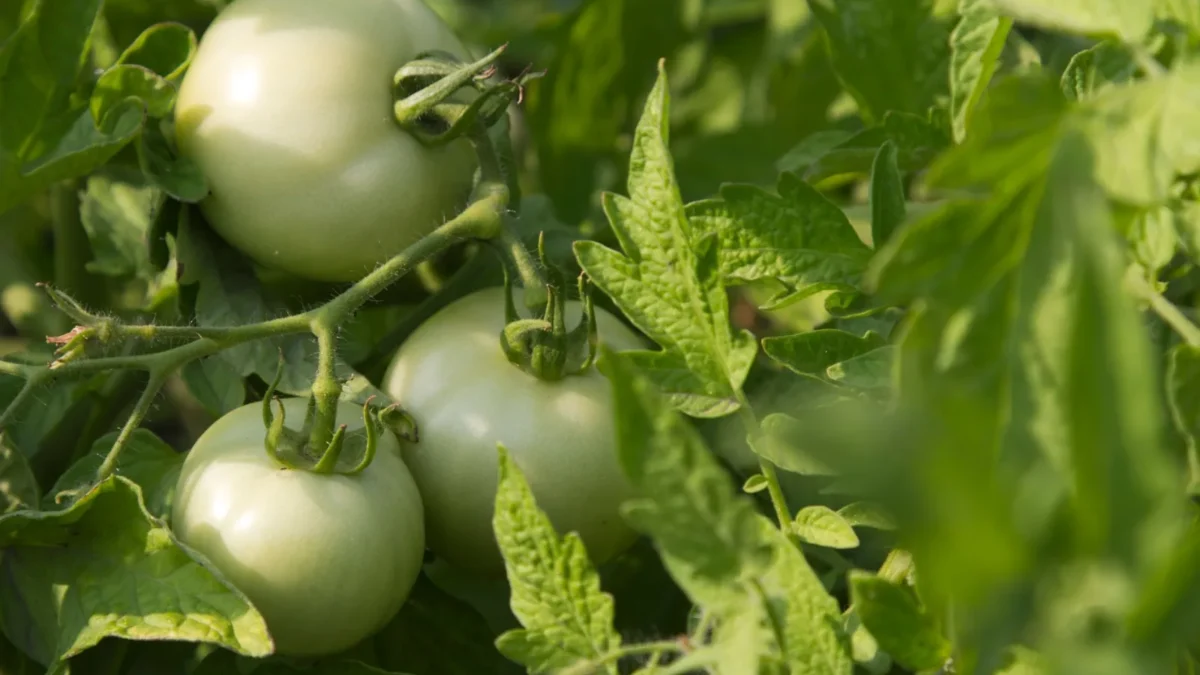
Quick answer: Purple leaves on tomato plants usually mean your soil lacks phosphorus or temperatures have dropped below ideal. Both are fixable—adjust feeding or wait for warmer weather.
| Botanical name | Solanum lycopersicum |
|---|---|
| Light | Bright overhead light for seedlings; light not necessary for fruit ripening |
| Watering | Keep soil evenly moist; water deeply 1–2 inches weekly in-ground; daily for containers |
| Temperature | Night temperatures 55–75°F for fruit set; avoid temperatures above 90°F |
| Soil | Deep, loamy, well-drained soil with organic matter; pH 6.2–6.8 |
| Feeding | Regular liquid tomato food once fruits form, per manufacturer instructions |
| Difficulty | moderate |
| Cats | ⚠️ toxic — Leaves, stems, green fruit contain solanine; ripe fruit non-toxic |
| Dogs | ⚠️ toxic — Leaves, stems, green fruit contain solanine; ripe fruit non-toxic |
| What you see | Likely cause | What to do |
|---|---|---|
| Purple or reddish leaves, especially on older growth | Phosphorus deficiency | Apply a tomato fertilizer once fruits form; choose one higher in phosphorus |
| Purple leaves after cold nights | Low temperatures | Wait for warmer weather; fruit set needs nights between 55–75°F |
| Purple leaves with yellowing | Cold combined with poor drainage | Improve drainage, warm soil with mulch, and wait for temps to rise |
| Purple leaves on new growth only | Phosphorus unavailable (cold soil locks it up) | Warm the soil; drainage problems prevent nutrient uptake in cold conditions |
| Purple leaves throughout, slow growth | Soil pH too low or too high | Test pH; tomatoes prefer 6.2–6.8 |
Understanding purple discoloration in tomato leaves
Phosphorus moves slowly through cold soil, so even if it’s present, your roots can’t access it. When soil temperature drops or moisture stays too high for too long, phosphorus becomes locked away and leaves turn purple as the plant struggles to make the chlorophyll it needs.
Temperature matters as much as nutrients. Night temperatures below 55°F stress the plant, and stress often shows as purple or reddish tones in the foliage. This is a survival response—the plant is redirecting energy inward rather than growing new tissue.
Fixing purple tomato leaves
If phosphorus is the issue:
- Start feeding with a proprietary liquid tomato food as soon as fruits form, following the manufacturer’s instructions
- Choose a formula with higher phosphorus content (the middle number on the label)
- Apply every 1–2 weeks through the growing season
- Check soil drainage; soggy soil prevents nutrient uptake even when fertilizer is present
If cold is the problem:
- Wait for consistent nighttime warmth. Fruit set happens reliably only when nights stay between 55–75°F
- Once temperatures stabilize, the purple colour typically fades over a few weeks
- Use mulch to keep soil warmer and more stable
For both issues:
Test your soil pH—tomatoes need 6.2–6.8. Outside this range, phosphorus (and other nutrients) stays locked in the soil even if it’s physically there. If pH is wrong, phosphorus won’t move into the plant no matter how much you add.
Prevention
Start feeding once fruits form with consistent applications of tomato food. Keep soil evenly moist—water deeply 1–2 inches weekly for ground-planted tomatoes, daily for containers in hot weather. Even moisture and steady warmth prevent the stress that makes purple leaves appear in the first place.
Read the full guide: Tomato Care: The Complete Growing Guide
Was this article helpful?
More about Tomato
The same problem in other plants
Sources
- Create Your Own Tomato Watering Schedule
- Visit us on the Web: www.gardeninghelp.org Tomatoes
- Plant a container: tomatoes
Photo: Valentin Ivantsov / Pexels, Pexels