
Cucumber Cucumis sativus
Why Are My Cucumber Leaves Turning Yellow?
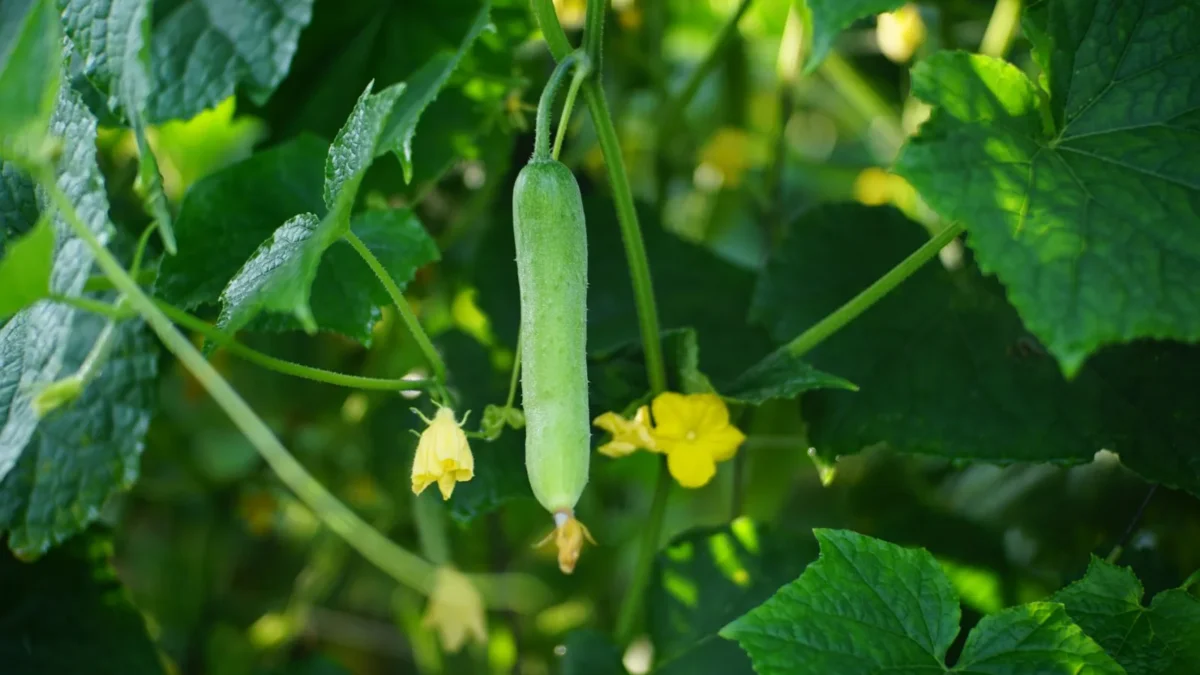
Quick answer: Cucumber leaves turn yellow for several reasons—overwatering or underwatering, nutrient deficiency (especially nitrogen), pests, or fungal diseases like downy mildew are the most common culprits. The good news is that once you identify which cause affects your plant, the fix is straightforward.
| Botanical name | Cucumis sativus |
|---|---|
| Light | Full sun |
| Watering | About 1 inch per week during growing season; water soil with drip or soaker hose |
| Temperature | Ideal 75-80°F for growth; killed by light frosts |
| Soil | Loose, fertile, medium textured, organically rich, slightly acidic, well-drained; pH 6.0-6.5 |
| Feeding | Balanced liquid fertilizer every 10-14 days for container plants |
| Size | Height 0.75-1.5 feet; spread 3-8 feet |
| Difficulty | easy |
| Cats | ✓ non-toxic |
| Dogs | ✓ non-toxic |
| What you see | Likely cause | What to do |
|---|---|---|
| Yellowing on older, lower leaves only | Normal aging or nitrogen shortage | If it spreads upward quickly, feed with balanced fertilizer every 10-14 days; if only old leaves yellow, it’s normal |
| Yellow spots between green veins on older leaves | Magnesium deficiency | Apply magnesium supplement; leaf tissue will flake off easily while veins stay green |
| Yellow leaves with green veins on new growth | Iron deficiency | Apply iron chelate; yellowing appears on upper, newer foliage |
| Yellow-tan angular spots between veins on upper leaf surface | Downy mildew | Improve air circulation, remove affected leaves, avoid wetting foliage when watering |
| Yellowing with webbing or tiny moving dots on undersides | Spider mites | Spray with water or use organic miticide; mites thrive in dry conditions |
| Yellowing throughout plant, wilting despite moisture | Overwatering or poor drainage | Allow soil to dry slightly between waterings; ensure soil drains well |
Distinguishing the causes
Start by looking at where the yellowing appears. Yellowing that affects only the oldest leaves at the base is often just the plant shedding its oldest growth—that’s normal aging. But if yellow spots spread upward or appear on new leaves at the top, something needs fixing.
Next, examine the pattern. Nitrogen shortage causes the oldest leaves to yellow first and the color progresses upward because nitrogen is a mobile nutrient the plant pulls from old tissue to fuel new growth. Magnesium deficiency shows yellow tissue between the veins while veins stay green—a pattern called interveinal chlorosis. Iron deficiency causes the newest growth to yellow with intact green veins.
Downy mildew (the disease of greatest economic importance in cucumber growing) creates yellow or tan angular spots—blocky patches—between leaf veins, mainly on older leaves in mid to late summer. Look on the undersides for a whitish, fuzzy coating. Powdery mildew, by contrast, forms a white powder on leaf surfaces and suppresses photosynthesis when it covers enough area.
Fixing yellowing from watering and nutrients
Cucumbers need about 1 inch of water per week during the growing season. Water the soil with a drip or soaker hose, never the leaves—keeping foliage dry prevents fungal diseases. Too much water suffocates roots; too little dehydrates them. If your soil drains poorly, amend it with compost in spring; loose, fertile, well-drained soil with pH between 6.0 and 6.5 is ideal.
For nutrient yellowing, use a balanced liquid fertilizer every 10-14 days, especially for container plants. Nitrogen shortage yellows the oldest leaves first, so feed promptly to redirect nutrients to new growth.
Managing pests and disease
Spider mites pierce leaf cells and extract sap, causing yellowing with fine stippling. They prefer hot, dry conditions, so consistent moisture and good air circulation help. Downy mildew thrives in humid, cool nights—increase airflow by growing plants vertically on a trellis. Remove the affected leaves and never water in the evening.
For powdery mildew (white coating on leaves), spray with milk diluted 1 part milk to 10 parts water, twice per week. Potassium bicarbonate and sulfur also work. But milk does not treat downy mildew—that requires improving air circulation and removing affected foliage.
Prevention
Grow cucumbers in full sun with temperatures ideally between 75–80°F. Water deeply at soil level, never the leaves. Space plants to ensure good airflow, and grow them on trellises or cages. Check plants regularly for the first sign of yellowing so you can act early before problems spread.
Read the full guide: Cucumber Care: The Complete Growing Guide
Was this article helpful?
More about Cucumber
The same problem in other plants
- Lettuce Leaves Turning Yellow: Causes and Fixes
- Bell Pepper Leaves Turning Yellow: Causes and Fixes
- Why Are My Zucchini Leaves Turning Yellow?
- Why Are My Tomato Leaves Turning Yellow?
Sources
- Growing cucumbers in home gardens
- Why Are My Cucumbers Yellow? Reasons & Solutions Explained
- Cucumis sativus – Plant Finder
Photo: Agung Sutrisno / Pexels, Pexels