
Cucumber Cucumis sativus
Cucumber Care: The Complete Growing Guide
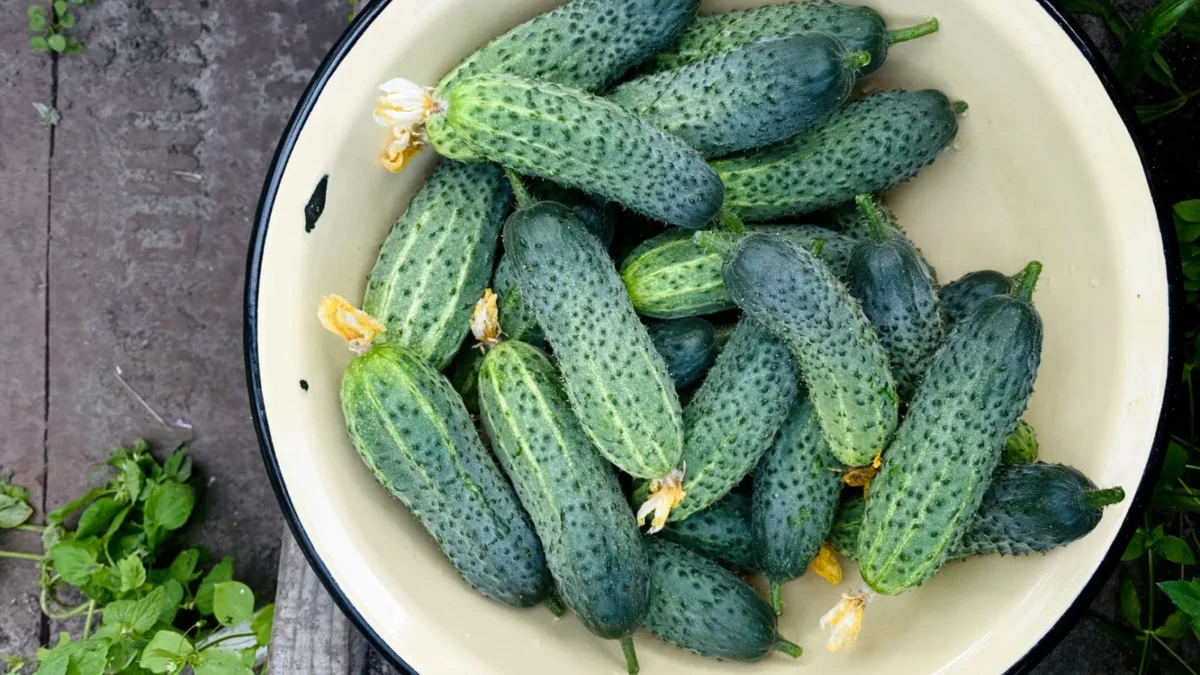
Cucumber care is straightforward once you understand what this vigorous plant needs: full sun, consistent moisture, warm temperatures, and rich soil. Most home gardeners find cucumbers rewarding to grow because they respond quickly to good conditions and produce abundantly when their basic needs are met. This guide covers everything from planting through harvest, plus solutions for the problems most likely to disrupt your crop.
| Botanical name | Cucumis sativus |
|---|---|
| Light | Full sun |
| Watering | About 1 inch per week during growing season; water soil with drip or soaker hose |
| Temperature | Ideal 75-80°F for growth; killed by light frosts |
| Soil | Loose, fertile, medium textured, organically rich, slightly acidic, well-drained; pH 6.0-6.5 |
| Feeding | Balanced liquid fertilizer every 10-14 days for container plants |
| Size | Height 0.75-1.5 feet; spread 3-8 feet |
| Difficulty | easy |
| Cats | ✓ non-toxic |
| Dogs | ✓ non-toxic |
Sunlight and Temperature Requirements for Cucumbers
Cucumbers thrive in full sun and need warmth to get going. The ideal soil temperature for seed germination is 70°F, with growth and development fastest between 75 and 80°F. Even a light frost is enough to kill the crop outright, so don’t rush planting in spring — wait until the soil has genuinely warmed and all frost risk has passed.
Watering Cucumbers
Cucumbers need about one inch of water from rainfall or irrigation every week during the growing season. The method matters as much as the amount: always soak the soil thoroughly and water with a drip hose, soaker hose, or a careful watering at the base of the plant, so the leaves stay dry. Wet foliage is one of the easiest ways to invite fungal disease, so avoid overhead sprinklers altogether.
Sandy soils need watering more often but with less water applied each time, since they drain quickly and don’t hold moisture the way loamy or clay soils do. Plants grown on a trellis or other vertical support, which dry out faster than ground-level plants, often need watering more frequently than sprawling vines. Too much water is just as damaging as too little: it robs the soil of the oxygen roots need to grow, while too little starves the roots of moisture — both ends of the spectrum stress the plant in similar ways.
Soil, Spacing, and Supports
Cucumbers grow best in loose, fertile, medium-textured, organically rich, slightly acidic, well-drained soil, with a pH between 6.0 and 6.5 for the best yield and quality. Work in well-rotted manure or compost in spring or fall to build up organic matter — never use fresh manure, since it can carry harmful bacteria and encourage weeds.
Plant seed about 1 inch deep, in rows 4–6 feet apart, or in hills spaced 4–6 feet apart; you can also start seed indoors in pots 4–6 weeks before your last spring frost date for an earlier harvest. Cucumber plants themselves are relatively modest in height (0.75 to 1.5 feet) but spread widely, from 3 to 8 feet, so give vines room to sprawl or provide a trellis.
Growing cucumbers up a trellis or cage, rather than letting them sprawl on the ground, is one of the most effective things you can do for plant health: it keeps the foliage off damp soil, improves airflow around the leaves, and makes fruit easier to spot and pick before it overgrows. Once a trellised plant reaches the top of its support, pinch out the growing tip to encourage branching instead.
Fertilizing Cucumbers
Feed cucumbers every 10–14 days with a balanced liquid fertilizer, whether they’re growing in the ground or in containers. Consistent, moderate feeding on this schedule supports the plant’s rapid growth and heavy fruit production without pushing it toward the nutrient imbalances that cause leaf problems, covered below.
Harvesting Cucumbers
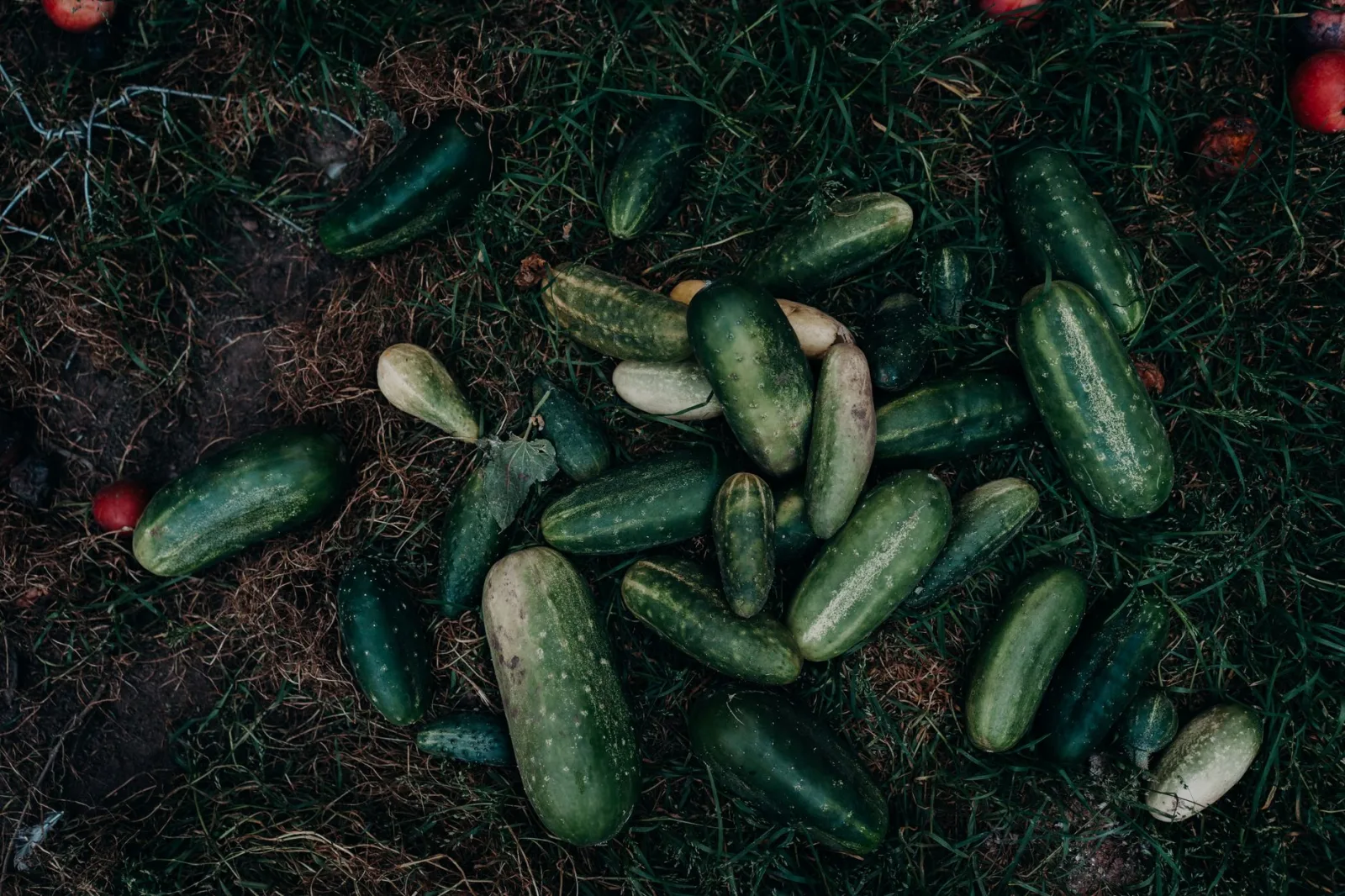
Pick fruit while it’s still young — older cucumbers toughen and develop large seeds as they continue to mature on the vine, so don’t let them sit once they’ve reached a usable size. Once fruit reaches about the size of a tennis ball, harvest regularly; picking fruit promptly and often actually encourages the plant to keep producing more. Harvest in the afternoon after any dew has dried from the leaves — working around wet foliage can spread disease from plant to plant. Harvested fruit rarely turns yellow after picking, so if you see yellowing cucumbers in storage, it’s worth double-checking they weren’t already overripe when picked.
Common Cucumber Problems: Yellow Leaves
Yellowing cucumber leaves have several distinct causes, and telling them apart by where the yellowing appears makes diagnosis much easier.
Nutrient deficiency, especially nitrogen, is the most common reason for yellow cucumber leaves. Nitrogen is mobile within the plant, so a shortage shows up first on the older, lower leaves, which yellow uniformly while new growth stays green — this bottom-up pattern is the classic fingerprint of nitrogen shortage.
Magnesium deficiency looks different: yellow tissue appears between the leaf veins on older leaves while the veins themselves stay green, a pattern called interveinal chlorosis. If the yellowed tissue flakes off easily while the veins stay intact, magnesium is the most likely cause.
Iron deficiency shows the same interveinal yellowing pattern but on new growth instead of old leaves, with the veins remaining green against yellow tissue. Correcting it usually means applying a micronutrient fertilizer that includes iron, which brings noticeable improvement fairly quickly.
New-growth yellowing that spreads quickly, or yellow spots appearing suddenly, is different from normal lower-leaf aging and usually signals a problem that needs attention — watering issues, nutrient deficiency, pests, or a disease like downy mildew are the typical causes, covered in the next section.
Pests and Diseases Affecting Cucumbers
Cucumber beetles are yellow-green with black stripes or spots and about ¼ inch long; they’re one of the most serious pests because striped cucumber beetles can carry the bacteria that causes bacterial wilt, sometimes infecting plants as early as the seedling stage. Early and continuous control is critical once they’re spotted.
Aphids and two-spotted spider mites both feed by piercing plant tissue and extracting sap, which reduces plant vigor and can cut into yield if left unchecked; spider mites are especially fast-reproducing and spin visible webbing as populations build.
Downy mildew, caused by the water-mold pathogen Pseudoperonospora cubensis, is the single most economically damaging cucumber disease. It shows up as yellow or tan, angular spots between the leaf veins on the upper surface of older leaves, typically in early to late summer.
Powdery mildew is less damaging overall but still cuts yield by covering leaf surfaces and suppressing photosynthesis once it spreads. A well-known home remedy is milk diluted with water (roughly 1:10 to 1:2) sprayed on affected foliage twice a week — but it only works against powdery mildew, not downy mildew, which is a different pathogen entirely. Other options include potassium bicarbonate, sulfur, neutralized phosphorous acid, horticultural oils, and biological controls.
Anthracnose, caused by Colletotrichum orbiculare, is another fungal disease to watch for on the foliage.
Good airflow is the single best defense against most of these fungal problems — trellising, proper spacing, and watering at the base rather than overhead all reduce the humid conditions these pathogens need to spread.
Is Cucumber Toxic to Cats and Dogs?
Cucumber is non-toxic to both cats and dogs according to the ASPCA. Most cats that nibble a small amount of plain, washed cucumber do fine, though too much can cause mild stomach upset, and large, firm pieces can pose a choking risk, so cut cucumber into manageable pieces if you’re sharing it with a pet.
Growing Cucumbers Alongside Other Vegetables
Cucumbers do well in containers and garden beds alongside a wide range of companions, including beans, beets, carrots, collards, eggplants, garlic, kale, leeks, lettuces, mustard greens, peas, peppers, potatoes, spinach, squash, Swiss chard, and tomatoes. This flexibility makes cucumbers an easy fit into almost any vegetable garden layout, provided each plant still gets the full sun and steady water it needs.
Was this article helpful?
More about Cucumber
Sources
- Growing cucumbers in home gardens
- Cucumis sativus – Plant Finder
- Why Are My Cucumbers Yellow? Reasons & Solutions Explained
Photo: Юлия Кондратова / Pexels, Pexels