
Cucumber Cucumis sativus
Cucumber Pests: Identification and Control
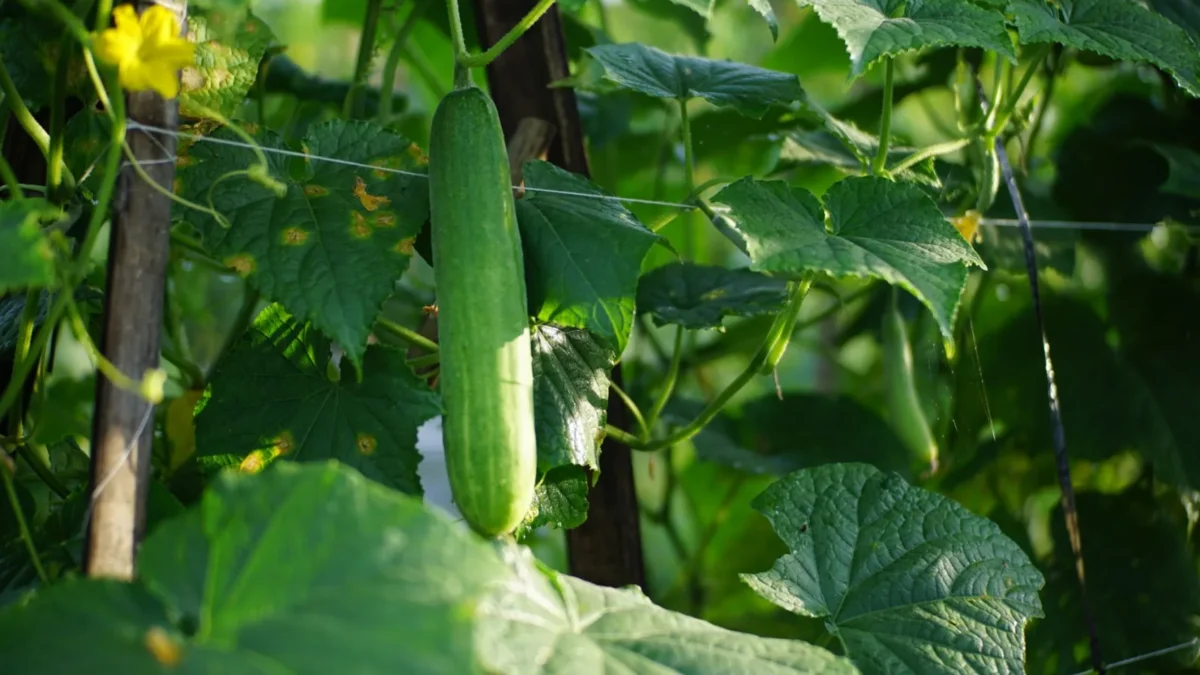
Quick answer: Three major cucumber pests—spider mites, aphids, and cucumber beetles—cause visible damage and reduce yield. Spider mites puncture leaves leaving stippling; aphids extract sap weakening plants; beetles are yellow-green insects about ¼ inch long that spread bacterial wilt.
| Botanical name | Cucumis sativus |
|---|---|
| Light | Full sun |
| Watering | About 1 inch per week during growing season; water soil with drip or soaker hose |
| Temperature | Ideal 75-80°F for growth; killed by light frosts |
| Soil | Loose, fertile, medium textured, organically rich, slightly acidic, well-drained; pH 6.0-6.5 |
| Feeding | Balanced liquid fertilizer every 10-14 days for container plants |
| Size | Height 0.75-1.5 feet; spread 3-8 feet |
| Difficulty | easy |
| Cats | ✓ non-toxic |
| Dogs | ✓ non-toxic |
| What you see | Likely cause | What to do |
|---|---|---|
| Fine webbing and stippled (speckled) leaves with yellowing | Two-spotted spider mites | Spray leaves thoroughly with water to dislodge mites; use miticides or neem oil if infestation persists |
| Clusters of soft-bodied insects, sticky residue, curled leaves | Aphids (multiple species) | Remove with strong water spray; apply insecticidal soap or neem oil; release beneficial insects like ladybugs |
| Yellow-green beetles with stripes or spots, ¼ inch long; wilting plants | Cucumber beetles | Hand-pick or use row covers on seedlings; apply spinosad or pyrethrin-based insecticides; eliminate weeds that harbor beetles |
| White powdery coating on leaves | Powdery mildew | Spray milk-water solution (1:10 to 1:2 ratio) twice weekly; use sulfur or potassium bicarbonate fungicides |
| Yellow or tan angular spots on older leaf undersides | Downy mildew | Remove infected leaves; improve airflow by trellising; apply copper fungicides or biological controls; harvest in afternoon when leaves are dry |
Identifying Spider Mites and Aphids
Two-spotted spider mites are nearly invisible to the naked eye but their damage is unmistakable. Look for fine webbing on the undersides and between leaves, plus a speckled appearance where they’ve punctured cells and extracted contents. Leaves take on a bronze or yellowish cast as the infestation worsens and photosynthesis slows.
Aphids are easier to spot—they’re soft-bodied insects that cluster densely on new growth and the undersides of leaves. Several species attack cucumbers (cotton aphid, glasshouse potato aphid, green peach aphid, and potato aphid). You’ll notice sticky residue on leaves below the insects and curling or wilting foliage even when soil moisture is adequate.
Cucumber Beetles and Bacterial Wilt
Cucumber beetles are the most damaging pest overall because of what they carry, not just what they eat. Adult striped or spotted beetles are yellow-green with distinctive markings and measure about ¼ inch long. Striped beetles in particular transmit bacterial wilt, a disease with no cure. The risk starts early: beetles can infect seedlings at the cotyledon stage, before the plant is firmly established.
Control them aggressively from planting onward. Hand-pick beetles on young plants and use row covers to shield seedlings. For larger infestations, spinosad or pyrethrin-based insecticides work quickly. Remove nearby weeds where beetles overwinter.
Organic and Chemical Control Methods
For spider mites and aphids, start with water spray to dislodge them, then move to insecticidal soap or neem oil if the population returns. Introducing natural predators like ladybugs also helps control aphids long-term.
For powdery mildew specifically, a natural approach works remarkably well: mix milk with water at a 1:10 to 1:2 ratio and spray affected foliage twice weekly. If milk doesn’t suffice, potassium bicarbonate, sulfur, neutralized phosphorous acid, or emulsified oil fungicides are effective alternatives.
For downy mildew, which is caused by a water mold pathogen, improve airflow by trellising plants and harvesting in the afternoon after dew dries. Copper fungicides and biological control agents help prevent spread once the disease appears.
Prevention Through Growing Conditions
Healthy, vigorous plants resist pests better than stressed ones. Grow cucumbers in full sun with consistent moisture—about 1 inch per week. Water the soil with a drip or soaker hose, keeping leaves dry to prevent fungal disease. Space plants properly and trellis them to maximize airflow; good air circulation slows mite and mildew development. Feed container plants every 10–14 days with balanced fertilizer to maintain vigor.
Remove and destroy heavily infected leaves immediately to slow disease spread. Pick fruit regularly once plants fruit; pest populations build when older fruit remains on the plant.
Read the full guide: Cucumber Care: The Complete Growing Guide
Was this article helpful?
More about Cucumber
The same problem in other plants
- Common Carrot Pests and How to Control Them
- Bell Pepper Pests: What's Eating Your Plants and How to Stop Them
- Common Zucchini Pests and How to Stop Them
- Common Tomato Pests: Identification and Organic Control
Sources
- Growing cucumbers in home gardens
- Key to Common Problems of Cucumbers
- Cucumber – Pests, Diseases and Biological Control
Photo: Agung Sutrisno / Pexels, Pexels