
Carrot Daucus carota
Common Carrot Pests and How to Control Them
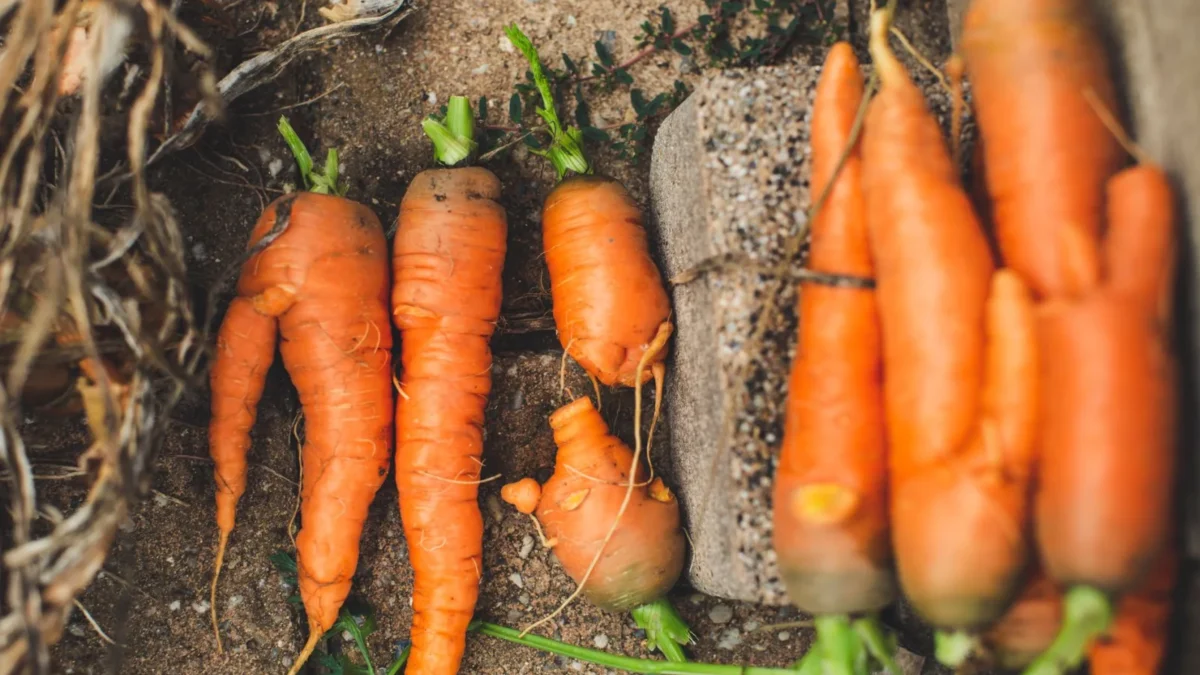
Quick answer: The main carrot pests are carrot rust fly larvae, which tunnel into roots, and root-knot nematodes, which cause galls and damage marketability. Control them with row covers, yellow sticky traps for monitoring, companion planting, and crop isolation.
| Botanical name | Daucus carota |
|---|---|
| Light | Full sun; at least 6 hours direct light daily; prefers 8-10 hours |
| Watering | 1 inch per week; deep soaking to 6-8 inches via soaker hose or irrigation |
| Temperature | Optimal soil temperature 55-75°F for germination; plant when soil is 45-50°F |
| Soil | Sandy loam; deep, well-drained; pH 6-7; raised beds 12-15 inches deep recommended |
| Feeding | Incorporate prior to planting; avoid excess nitrogen; ensure adequate nitrogen for early growth |
| Size | Thin to 2-4 inches apart for root development |
| Difficulty | easy |
Carrot rust fly and root damage
Carrot rust fly (Psila rosae) is the most troublesome insect pest for home growers. The adult flies cause no damage themselves, but once eggs hatch, the larvae burrow directly into the soil and feed on your roots. Young carrots are especially vulnerable—larvae damage small roots right after germination—but mature carrots also suffer as larvae tunnel through the developing root. You’ll recognize the damage by rust-colored frass (larval excrement) left in the tunnels.
Since carrot rust flies are weak flyers and attracted upwind by the smell of their host crop, populations tend to stay localized. This means you have several practical options:
-
Use row covers. Cover beds with lightweight row cover as soon as seedlings emerge, whenever carrot flies are active in your area. This physically blocks the adult flies from reaching plants.
-
Monitor with yellow sticky traps. Set out traps weekly. If counts stay at zero or very low, you can delay or skip other control methods entirely.
-
Plant companion crops. Carrot flies locate their host by smell, so planting strongly aromatic companions like onions, chives, garlic, rosemary, or sage nearby successfully masks the carrot scent and deters attack.
-
Isolate from previous plantings. Grow carrots in a different area from where you grew them or other umbelliferous crops (parsnips, celery, celeriac) last year. This reduces the local fly population significantly, especially if the new planting is downwind of the old location.
Root-knot nematodes and other soil pests
Root-knot nematodes cause galls—visible swellings of various sizes and shapes—on carrot roots. These deformities directly reduce marketability and cause the plant to decline overall. Management depends on your soil history; nematode populations vary considerably from garden to garden. If you suspect nematodes from previous poor harvests or galled roots, a soil test can confirm them before planting, and resistant cultivars or rotation to non-host crops can help.
Foliar diseases and storage problems
Alternaria dauci is one of the most damaging fungal pathogens, killing carrot leaves above ground and sometimes rotting vegetables still in the soil. For management, use a resistant or tolerant cultivar if available, and monitor disease development carefully.
Black root rot, caused by a soil fungus, shows dark discoloration at the base of the stem. It’s primarily a storage problem rather than a field problem—it develops when stored carrots sit in conditions with temperature and humidity that are too high. To prevent it, avoid injuries to roots and crowns during harvest, since infection favors wounded tissue.
FAQ
What does carrot rust fly damage look like?
You’ll see rusty-colored tunnels or holes in the root with rust-colored frass inside the tunnels. Young carrots may rot entirely, while older roots show external surface damage and internal tunneling.
When are carrot flies most active?
Carrot flies are attracted to the smell of growing carrots, so they’re most problematic when carrots are in the ground. Yellow sticky traps help you monitor when populations peak in your area, so you know when to deploy row covers or time other controls.
Can I use insecticides on carrots?
Organic growers typically rely on row covers, companion planting, and crop isolation rather than sprays. If you use conventional insecticides, follow label directions for safety timing before harvest.
Read the full guide: Carrot Care: The Complete Growing Guide
Was this article helpful?
More about Carrot
The same problem in other plants
- Bell Pepper Pests: What's Eating Your Plants and How to Stop Them
- Common Zucchini Pests and How to Stop Them
- Cucumber Pests: Identification and Control
- Common Tomato Pests: Identification and Organic Control
Sources
- carrots identifying diseases
- Carrot Rust Fly Biology & Management
- Vegetable Disease Photos – Purdue College of Agriculture
Photo: Markus Spiske / Pexels, Pexels