
Carrot Daucus carota
Why Are My Carrot Tops Turning Yellow?
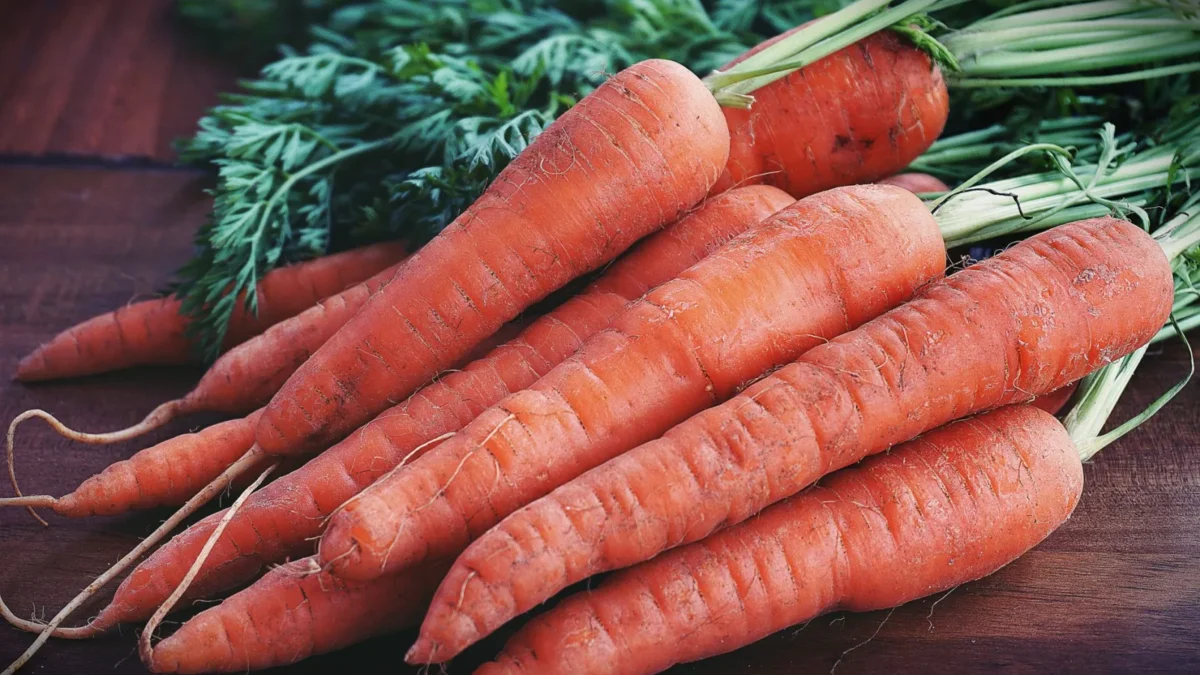
Quick answer: Carrots turning yellow usually signals either not enough water, poor drainage causing fungal disease, or inadequate nitrogen. The fix depends on which cause is at play—check your soil moisture, soil structure, and what the yellowing looks like.
| Botanical name | Daucus carota |
|---|---|
| Light | Full sun; at least 6 hours direct light daily; prefers 8-10 hours |
| Watering | 1 inch per week; deep soaking to 6-8 inches via soaker hose or irrigation |
| Temperature | Optimal soil temperature 55-75°F for germination; plant when soil is 45-50°F |
| Soil | Sandy loam; deep, well-drained; pH 6-7; raised beds 12-15 inches deep recommended |
| Feeding | Incorporate prior to planting; avoid excess nitrogen; ensure adequate nitrogen for early growth |
| Size | Thin to 2-4 inches apart for root development |
| Difficulty | easy |
Not enough water is the most common cause
Carrots need consistent soil moisture for good root development — a lack of water slows root expansion and leaves foliage looking dull and yellowed. Supply about 1 inch of water per week from rainfall or irrigation, soaking the soil to a depth of 6–8 inches using soaker hoses, trickle irrigation, or sprinklers. Watering by hand from a hose seldom supplies enough moisture and can damage soil structure; frequent light sprinkling also encourages shallow roots, which makes the whole plant more vulnerable to drought stress.
Fungal disease from poor drainage
If the yellowing is accompanied by wilting during dry spells, or the foliage looks water-soaked near the base, black root rot is a likely cause — it’s a soil-borne fungal disease that takes hold in poorly drained fields and shows as dark, water-soaked, blackened tissue. Leaf blight is another possibility, causing necrotic lesions that make the foliage appear brown or black rather than simply yellow.
Both of these problems trace back to drainage. Carrots need deep, loose, well-drained sandy or peaty soil — raised beds worked to a depth of 12 to 15 inches give the best drainage and the straightest, smoothest roots. If your garden has heavy clay, improving drainage with raised beds is usually a more reliable fix than trying to water around the problem.
Nitrogen: easy to get wrong in either direction
Carrots are unusual among root vegetables in that too much nitrogen is often a bigger problem than too little — excessive nitrogen reduces yields and lowers root quality, so side dressings of extra nitrogen aren’t normally needed once the bed is prepared. That said, a genuine nitrogen shortage during early growth can still show up as pale, yellowing foliage; the standard recommendation for vegetable crops is about 2 pounds of nitrogen per 1,000 square feet (roughly 3.2 ounces per 100 square feet), incorporated before planting rather than added later.
If a soil test shows high phosphorus and potassium already, use a nitrogen-only fertilizer rather than a balanced one — adding more phosphorus and potassium when levels are already high won’t help the roots and can harm beneficial soil microbes.
Pests that cause yellowing foliage
Carrot rust fly larvae tunnel into the soil and feed directly on the roots; while the adults don’t damage the plant, the larval damage can stress the whole plant enough to cause foliage yellowing as the root system struggles. You can monitor for this pest with yellow sticky traps, and masking the smell of the carrots by planting onions, chives, or garlic nearby can help deter the adult flies, which find host plants by scent.
Root-knot nematodes are another soil pest that can cause decline and yellowing, forming galls or thickenings on the roots themselves.
Getting the growing conditions right from the start
Carrots need full sun — at least 6 hours of direct light a day, with 8–10 hours ideal — and soil that stays in the neutral-to-slightly-acidic range, between pH 6 and 7. Getting these basics right from planting makes the plant far more resilient to the watering and disease pressures above.
FAQ
Is yellowing normal on carrot leaves as the plant matures?
Some yellowing on the oldest, lowest leaves late in the season can be normal as the plant redirects energy into the root, but yellowing that spreads upward or appears early in the season points to one of the causes above and is worth investigating.
How quickly will carrots recover once I fix the watering?
Because a lack of water directly slows root expansion, consistent watering usually shows visible improvement in foliage color within about a week, though full root recovery takes longer since carrots take 65–75 days to mature.
Can I still harvest carrots with yellow tops?
Yes, in most cases — you can harvest carrots any time they reach a usable size, and yellowing foliage caused by watering or nitrogen issues doesn’t necessarily mean the root underneath is unusable, though a plant affected by black root rot is worth checking closely before storing.
Read the full guide: Carrot Care: The Complete Growing Guide
Was this article helpful?
More about Carrot
The same problem in other plants
- Why Are My Strawberry Leaves Turning Yellow?
- Lettuce Leaves Turning Yellow: Causes and Fixes
- Bell Pepper Leaves Turning Yellow: Causes and Fixes
- Why Are My Zucchini Leaves Turning Yellow?
Sources
- Growing Carrots in a Home Garden
- HO-124: Small Plot and Intensive Gardening
- Growing carrots and parsnips in home gardens
Photo: Suzy Hazelwood / Pexels, Pexels