
Zucchini Cucurbita pepo var. cylindrica
How to Grow Zucchini in Containers and Pots
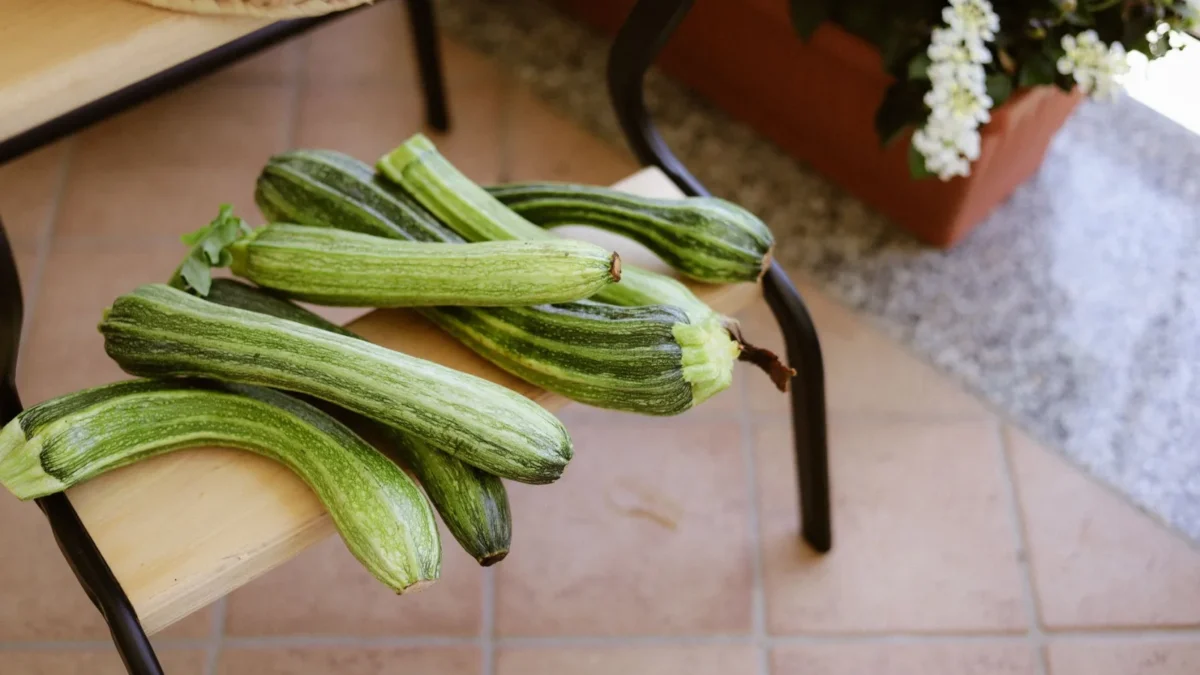
Quick answer: Zucchini thrives in containers with large pots (at least 5 gallons), consistent moisture, full sun for 8–10 hours daily, and well-drained fertile soil with a pH between 6.0 and 6.5. The main challenge is keeping moisture steady without overwatering—containers dry faster than garden beds, so you’ll water more often.
| Botanical name | Cucurbita pepo var. cylindrica |
|---|---|
| Light | 8-10 hours direct sunlight daily; full sun (6+ hours minimum) |
| Watering | Water when soil is dry 2 inches below surface; plentiful consistent moisture until fruits fill out |
| Temperature | Soil 65-70°F minimum for planting; optimal 70-95°F for germination |
| Soil | Well-drained, fertile, loose, organically rich; pH 6.0-6.5; moisture retentive |
| Feeding | Balanced 10-10-10 initially; avoid excess nitrogen; side-dress when female flowers appear |
| Size | 1-5 feet tall; 2-25 feet wide or long depending on cultivar |
| Difficulty | easy |
| Cats | ✓ non-toxic |
| Dogs | ✓ non-toxic |
Container size and drainage
Start with a large container to give zucchini room to develop a strong root system. Zucchini in outdoor containers requires a large container and frequent watering, so plan for at least 5 gallons of soil per plant. Bigger is better if you have space; a 10-gallon pot gives you a safety margin against drying out too quickly.
Drainage is non-negotiable. Incorporate drainage holes—preferably multiple—to prevent waterlogging, which can lead to root rot. Without proper drainage, moisture sits around the roots, creating conditions for fungal problems and rot.
Soil, light, and temperature
Fill your container with well-drained, fertile, loose soil, high in organic matter. Zucchini prefers a slightly acidic pH between 6.0 and 6.5. If your potting mix lacks organic matter, work in compost before planting.
Zucchini requires full sun, meaning 8–10 hours of direct sunlight a day. Place containers where they’ll get uninterrupted morning and afternoon sun. Without enough light, plants will flower poorly and produce few fruits.
Wait to plant until soil reaches at least 65°F, preferably 70°F or more. In cooler climates, hold off until late spring when soil has warmed. The optimal range for germination is between 70 and 95°F.
Watering routine for containers
Container soil dries faster than garden beds, so watering becomes your main responsibility. Typically, watering every 2–3 days during hot, dry periods suffices for container-grown zucchini. The soil is dry enough to water when it is dry two inches below the surface.
Zucchini plants prefer deep, infrequent watering that moistens the entire root zone without waterlogging. Plentiful and consistent moisture is needed from the time plants emerge until fruits begin to fill out. Once fruits start to mature, you can ease off slightly, but keep the soil consistently moist.
Use a drip hose, soaker hose, or careful watering of the soil so that leaves stay dry; do not use a sprinkler or spray the plants with a hose. Wet foliage invites powdery mildew and other fungal issues. Water at soil level only.
Watch the weather—hot spells mean more frequent watering. Mulch around the base of your container plants to help soil retain moisture.
Fertilizing in containers
Use a balanced fertilizer such as a 10-10-10 NPK ratio initially mixed into the soil. Work compost or fertilizer into the soil before planting, then side-dress when female flowers begin to appear.
Here’s the critical part: zucchini is very sensitive to excess nitrogen and may significantly delay its flowering if it receives too much nitrogen. This is especially important in containers, where fertilizer concentrates quickly. Avoid overfeeding. If your soil is rich in organic matter from compost, you may need less supplemental nitrogen than you think. Many soils have enough phosphorus, so unless a soil test specifically recommends additional phosphorus, use a low- or no-phosphorus fertilizer.
Spacing and air circulation
Give zucchini sufficient space to provide good air circulation. In a container setup, this means spacing pots at least 3 feet apart if you’re growing multiple plants, or positioning a single pot where air can flow around it freely. Poor air circulation increases the risk of powdery mildew, a common zucchini problem in humid conditions.
FAQ
Can I grow vining zucchini in a pot?
Yes, but you’ll need to support it. Bush and non-vining varieties are easier for containers because they stay compact. If you choose a vining type, install a trellis or stake in the container and train the vine up it. This saves space and improves air circulation.
How often should I harvest zucchini from container plants?
Zucchini should be 1.25 to 2 inches in diameter and 7 to 8 inches long. Pick them regularly every 1 or 2 days. Removing young fruit encourages the plant to produce more. Oversized zucchini that sits on the plant diverts energy away from new flowers and fruits.
Why are my container zucchini leaves turning yellow?
Check your watering first. Overwatering can produce yellowing of foliage, especially in containers where drainage is tight. Otherwise, possible causes include poor drainage, damaged roots, compacted roots, high soil pH, and nutrient deficiencies. If the yellowing starts on new leaves and the veins stay green, it’s likely iron deficiency. If both old and new leaves turn uniformly yellow, nitrogen may be low.
Read the full guide: Zucchini Care: The Complete Growing Guide
Was this article helpful?
More about Zucchini
The same problem in other plants
- Lettuce Spacing and Planting Distance
- Best Soil for Lettuce
- Best Soil for Bell Peppers: Container and Garden Growing
- Cucumber Spacing: How Far Apart to Plant