
Bell Pepper Capsicum annuum
Best Soil for Bell Peppers: Container and Garden Growing
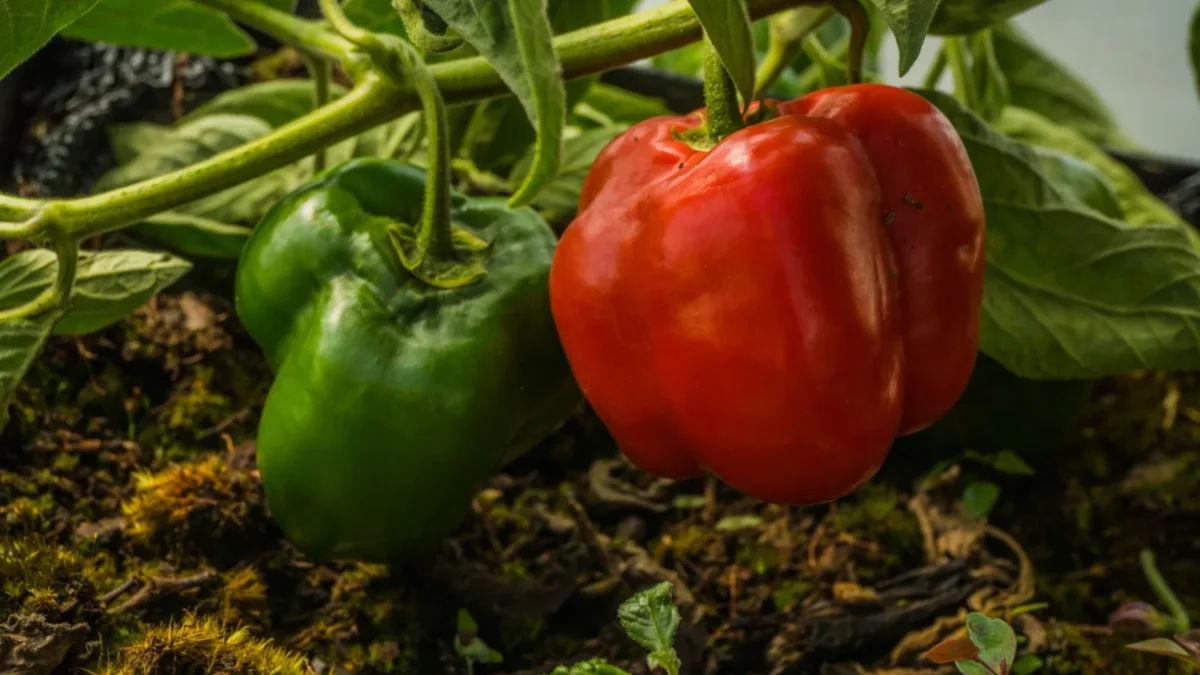
Quick answer: The best soil for bell peppers is well-drained loamy or sandy loam with a pH between 6.0 and 6.5. This prevents the root rot that bell peppers are prone to in saturated soil, while giving them the balanced nutrients and structure they need to thrive.
| Botanical name | Capsicum annuum |
|---|---|
| Light | Full sun for most of the day; 18-20 hours of light per day for seedlings |
| Watering | Water when soil is dry 2 inches below surface; avoid overhead watering; keep soil uniformly moist but not saturated |
| Temperature | Optimum 70-75°F; ideal vegetative growth 77-80°F day, 64-68°F night; avoid below 60°F or above 85°F |
| Soil | Well-drained loamy or sandy loam soil; pH 6.0-6.5 |
| Feeding | Moderate amounts; high potassium liquid fertilizer once first fruit sets |
| Size | 40-70cm tall |
| Difficulty | moderate |
Soil requirements for healthy bell pepper plants
Bell peppers refuse to tolerate waterlogged roots. This is their defining weakness, so drainage must come first. If your garden soil tends to stay wet or puddles after rain, build a raised bed or amend heavily with compost and coarse sand. For containers, never use standard potting soil alone—mix it with perlite or coarse sand to increase air space.
The pH matters too. Test your soil before planting; if it’s outside the 6.0 to 6.5 range, adjust it now rather than struggling through the season. A soil test also reveals what nutrients you’re starting with, so you won’t overfertilize. Bell peppers need only moderate amounts of fertilizer, and once the first fruit sets, switch to a high potassium liquid fertilizer.
Best soil for bell peppers in containers
Container growing lets you control everything, so take advantage. Use a mix of quality potting soil, compost, and perlite in roughly equal parts—this gives you drainage, nutrients, and root space. A container at least 12 inches across works, though 18–20 inches is better if space allows.
In containers, soil dries faster, especially in heat. Check 2 inches below the surface; if it’s dry, water thoroughly until it drains from the bottom. During hot, dry weather, you may need to water more than once per day. Never sprinkle lightly—a light wetting encourages shallow roots and makes plants vulnerable to drought stress and poor fruit quality. Soak the soil deeply to reach the entire root zone.
Best soil for bell peppers in garden beds
In the ground, loamy or sandy loam soil is ideal. If your soil is heavy clay, work in 2–3 inches of compost and coarse sand to improve drainage. If it’s sandy, it won’t hold water or nutrients as well, so amend it with compost and check soil moisture more often.
Keep the soil uniformly moist but never waterlogged; this also prevents blossom end rot, a common problem when watering is inconsistent. If you don’t get at least an inch of rain per week, soak the soil thoroughly at least once a week. Water at soil level only—avoid overhead watering, which spreads disease.
FAQ
Can I use regular garden soil for bell peppers?
Only if it’s naturally well-drained loam. Most garden soil needs amendment; clay-heavy soil must be mixed with compost and sand, and sandy soil needs compost to hold moisture and nutrients. A soil test shows exactly what you’re working with.
How often should I water bell peppers in containers?
Check the soil 2 inches down—if it’s dry, water thoroughly. During hot weather, this may be daily or more. The key is consistent moisture without saturation, since peppers don’t tolerate soggy soil.
What’s the fastest way to improve poor garden soil for bell peppers?
Work in 2–3 inches of compost and, if drainage is the issue, coarse sand or perlite. If soil pH is very wrong, amend according to your soil test results. For immediate results with better control, grow in a raised bed or large containers.
Read the full guide: Bell Pepper Care: The Complete Growing Guide
Was this article helpful?
More about Bell Pepper
The same problem in other plants
- Best Soil for Growing Carrots
- Lettuce Spacing and Planting Distance
- Best Soil for Lettuce
- How to Grow Zucchini in Containers and Pots
Sources
Photo: Juan Felipe Ramírez / Pexels, Pexels