
Bell Pepper Capsicum annuum
Why Your Bell Pepper Plant Is Dying: Causes and Recovery
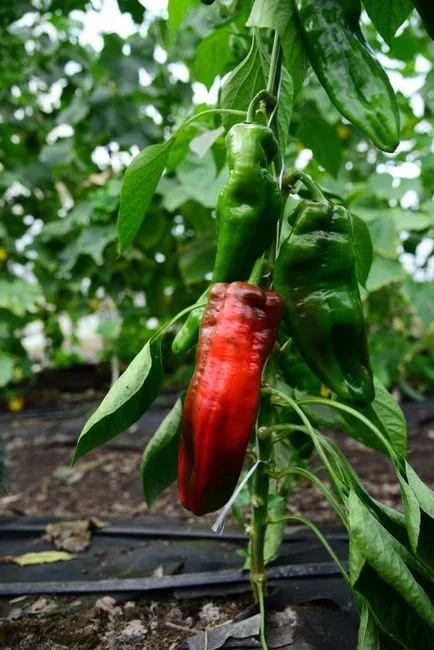
Quick answer: Bell pepper root rot and stem rot are the deadliest threats to your plant, caused by overwatering and poor drainage. The second most critical issue is temperature shock—peppers drop flowers and decline rapidly outside their ideal range. Fix drainage immediately, check soil moisture before watering, and avoid temperatures below 60°F or above 85°F.
| Botanical name | Capsicum annuum |
|---|---|
| Light | Full sun for most of the day; 18-20 hours of light per day for seedlings |
| Watering | Water when soil is dry 2 inches below surface; avoid overhead watering; keep soil uniformly moist but not saturated |
| Temperature | Optimum 70-75°F; ideal vegetative growth 77-80°F day, 64-68°F night; avoid below 60°F or above 85°F |
| Soil | Well-drained loamy or sandy loam soil; pH 6.0-6.5 |
| Feeding | Moderate amounts; high potassium liquid fertilizer once first fruit sets |
| Size | 40-70cm tall |
| Difficulty | moderate |
Bell Pepper Root Rot and Stem Rot: The Drainage Problem
Bell peppers fail fastest when their roots sit in wet soil. This creates the perfect conditions for root and stem rot to take hold. The plant weakens, leaves yellow and drop, and the whole plant collapses within days or weeks.
The root cause is almost always a mismatch between how much you’re watering and how well your soil drains. Sandy or loamy soil drains naturally, but if you’re using heavy clay or potting soil without added perlite, water pools around the roots. Even with good soil, watering too often suffocates the roots.
To fix it now: Check the soil two inches below the surface. If it’s wet, stop watering. Remove the plant from its pot if possible and examine the roots—healthy roots are tan or white; rotted roots are dark, mushy, and smell sour. If rot is severe and extends up the stem, the plant may not recover. If it’s caught early and only the roots are affected, repot into fresh, well-draining soil and don’t water again until the top two inches dry out.
To prevent it: Water deeply but infrequently. Use drip irrigation or water at the base of the plant, never overhead. If your soil is sandy, you’ll need to water more often than once weekly, but still let the soil dry slightly between waterings. The key is uniform moisture—not dry, not soggy.
Temperature Shock and Flower Drop
Bell peppers are sensitive to temperature extremes. When temperatures drop below 60°F or climb above 85°F, flowers abort and fruit won’t set, even on a healthy plant. The plant itself doesn’t die immediately, but it stops producing, leaving you with a leafy green plant and nothing to harvest.
The ideal range for growth is 77–80°F during the day and 64–68°F at night. If your plant is indoors in a cool room or outdoors in late spring before the soil has warmed, this is likely your problem. If nights are consistently below 65°F, move potted peppers to a warmer spot or wait until air temperatures stabilize.
Severe Nutrient Deficiency and Weak Growth
Bell peppers need moderate fertilizer, not heavy feeding. But once flowers and fruit begin to set, the demand shifts. Switch to a high-potassium liquid fertilizer at this stage to support fruit development. Without it, fruits stay small, plants look stunted, and leaves may pale.
If your plant has been in the same soil for months without feeding, or if you’re using very sandy soil, nutrient depletion is likely. Begin feeding with a balanced formula now, then switch to high-potassium once fruit appears.
Why Your Bell Pepper Plant Is Dying: Soil pH and Disease
Soil pH matters. Bell peppers prefer acidic to neutral soil between 6.0 and 6.5. Outside this range, the plant can’t absorb nutrients efficiently even if they’re present in the soil. If your plant looks pale or weak despite feeding, test your soil pH.
Bacteria and fungal diseases thrive in warm, humid conditions with wet foliage. Overhead watering and poor air circulation create these conditions. Avoid wetting leaves; water only at soil level. If you see dark spots on leaves or stems, improve airflow and stop overhead watering immediately.
How to Revive a Dying Bell Pepper Plant
- Inspect the roots and stem. Unpot the plant and look for rot. If the base of the stem is mushy or black, the plant is likely dead. If only roots are affected, proceed.
- Repot into fresh, well-draining soil if rot is present.
- Adjust watering. Check soil moisture before every watering. Water deeply, then let it dry slightly before the next watering.
- Move the plant to a warmer location if temperatures are below 65°F at night.
- Feed with a balanced fertilizer if the plant looks pale, switching to high-potassium once fruit sets.
- Prune damaged leaves and stems to redirect energy to new growth.
Revival takes 2–3 weeks of stable conditions. Some plants recover fully; others may take the season to produce fruit again. Prevention—good drainage, appropriate watering, and stable temperature—is far easier than rescue.
Read the full guide: Bell Pepper Care: The Complete Growing Guide
Was this article helpful?