
Bell Pepper Capsicum annuum
When and How to Fertilize Bell Peppers
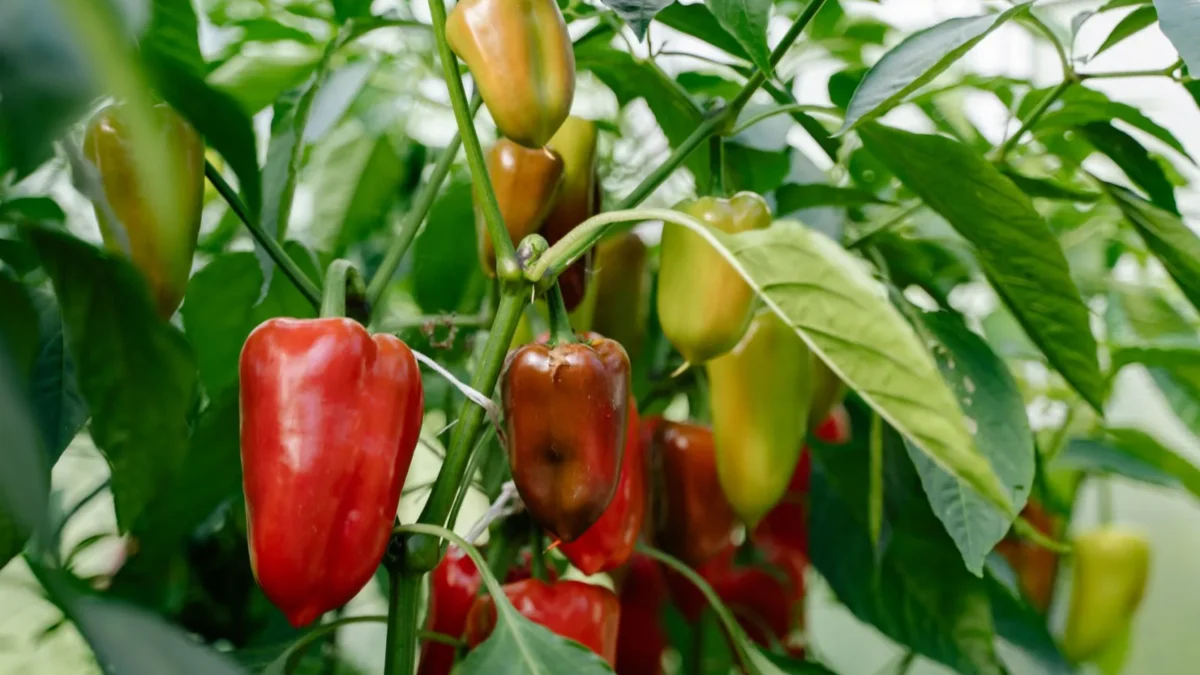
Quick answer: Bell peppers require moderate amounts of fertilizer throughout their life, but the timing and type shift at a critical moment. Wait until the first fruit has set, then switch to a high-potassium liquid fertilizer and continue feeding regularly. Before that point, focus on getting strong seedlings and healthy growth—fertilizer isn’t the limiting factor.
| Botanical name | Capsicum annuum |
|---|---|
| Light | Full sun for most of the day; 18-20 hours of light per day for seedlings |
| Watering | Water when soil is dry 2 inches below surface; avoid overhead watering; keep soil uniformly moist but not saturated |
| Temperature | Optimum 70-75°F; ideal vegetative growth 77-80°F day, 64-68°F night; avoid below 60°F or above 85°F |
| Soil | Well-drained loamy or sandy loam soil; pH 6.0-6.5 |
| Feeding | Moderate amounts; high potassium liquid fertilizer once first fruit sets |
| Size | 40-70cm tall |
| Difficulty | moderate |
Fertilizing bell pepper seedlings
When you start pepper seeds indoors about eight weeks before planting outside, hold off on fertilizer for the first few weeks. Young seedlings in fresh seed-starting mix have enough nutrients to establish roots and their first true leaves.
If your seedlings look pale or stop growing after 3–4 weeks, mix a diluted balanced liquid fertilizer (half strength) and feed every two weeks. The bigger risk at this stage isn’t nutrient deficiency—it’s giving them too much, which can burn tender roots. What seedlings actually struggle with is weak light. Without 18 to 20 hours of bright light per day, they’ll stretch and become leggy no matter how well you feed them, so prioritize light over fertility.
Fertilizing bell peppers after planting out
Once you transplant your peppers into the garden in a well-drained, loamy or sandy loam soil with a pH between 6.0 and 6.5, they’re in a different phase. For the first month or two in the ground, peppers grow foliage and develop a strong root system. A single application of balanced fertilizer when planting, or light feeding every 3–4 weeks, is enough.
Watch your plant: if leaves are dark green and growth looks vigorous, you’re feeding adequately. If new leaves look pale or small, increase feeding slightly. Never overdo it—peppers prefer moderate amounts, and too much nitrogen pushes leafy growth at the expense of flowers and fruit.
Fertilizing once flowering and fruiting begins
This is where the approach changes. The moment your first fruit sets, switch to a high-potassium liquid fertilizer and feed regularly. Potassium supports fruit development, ripeness, and flavor. Apply every 1–2 weeks depending on the product label; most liquid fertilizers for fruiting vegetables give clear directions for frequency.
Keep watering consistent—the soil should be uniformly moist but not saturated—as calcium uptake (needed to prevent blossom end rot) depends on steady moisture. In hot weather, you may need to water daily or more, which is also when regular feeding matters most for continuous fruit production.
FAQ
Can I fertilize bell pepper seedlings indoors?
Yes, but only if they’re pale or stunted after 3–4 weeks. Use half-strength liquid fertilizer every two weeks. Light is far more important than fertility for healthy seedlings.
What’s the best fertilizer for bell peppers?
Use a balanced fertilizer (like 10-10-10) early on, then switch to high-potassium (like 5-10-10) once the first fruit sets.
How often should I feed bell peppers in the garden?
Every 3–4 weeks before fruiting; every 1–2 weeks once fruit appears, using a liquid formula suited to fruiting crops.
Read the full guide: Bell Pepper Care: The Complete Growing Guide
Was this article helpful?
More about Bell Pepper
The same problem in other plants
- Best Fertilizer for Carrots and When to Apply It
- When to Fertilize Lettuce
- Best Fertilizer for Zucchini Plants
- Best Fertilizer for Cucumber Plants
Sources
Photo: Yan Krukau / Pexels, Pexels